Serving Lakeville, MN & nearby
(952) 246-5117
Lakeville, MN

Is Your Lakeville Garage Door Worth Repairing, or Time to Replace It

Lakeville homes mostly date 1955-2004, median 1984, so many doors are original hardware on cold-climate framing. Here's what to fix and what to replace.

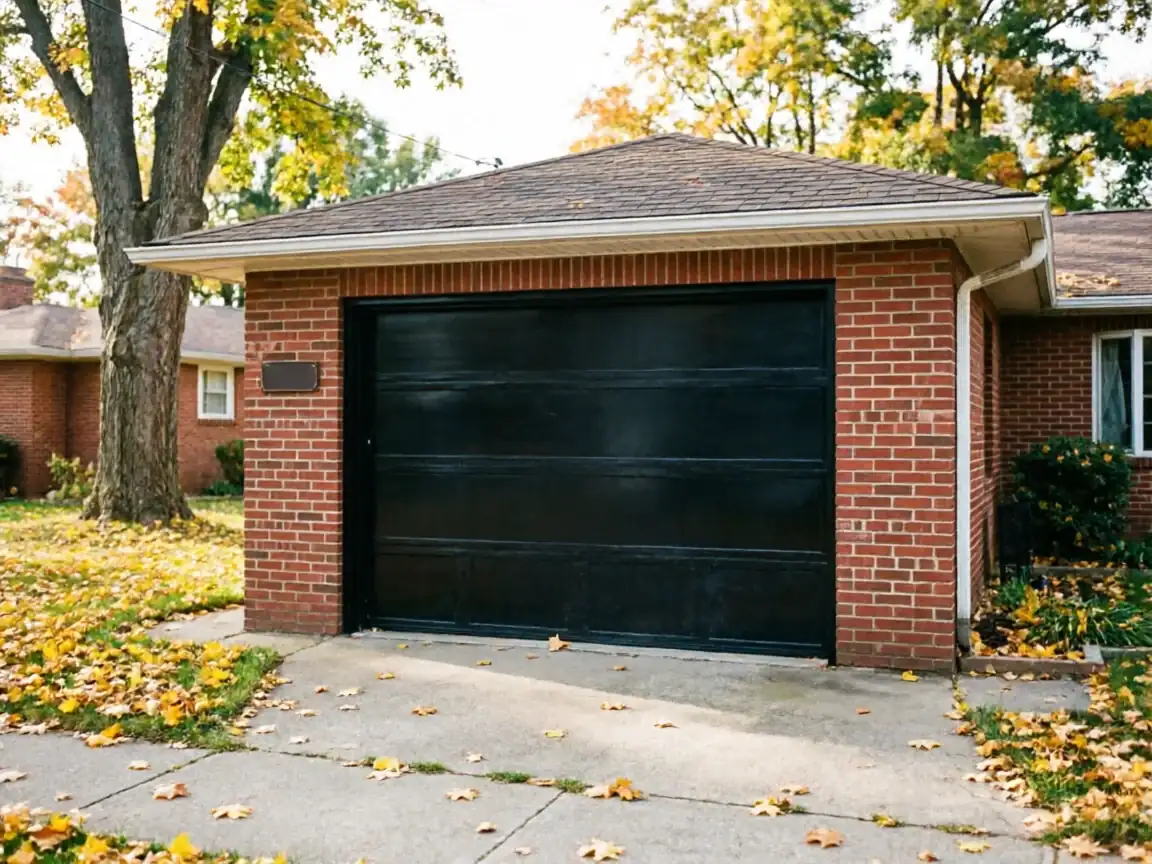
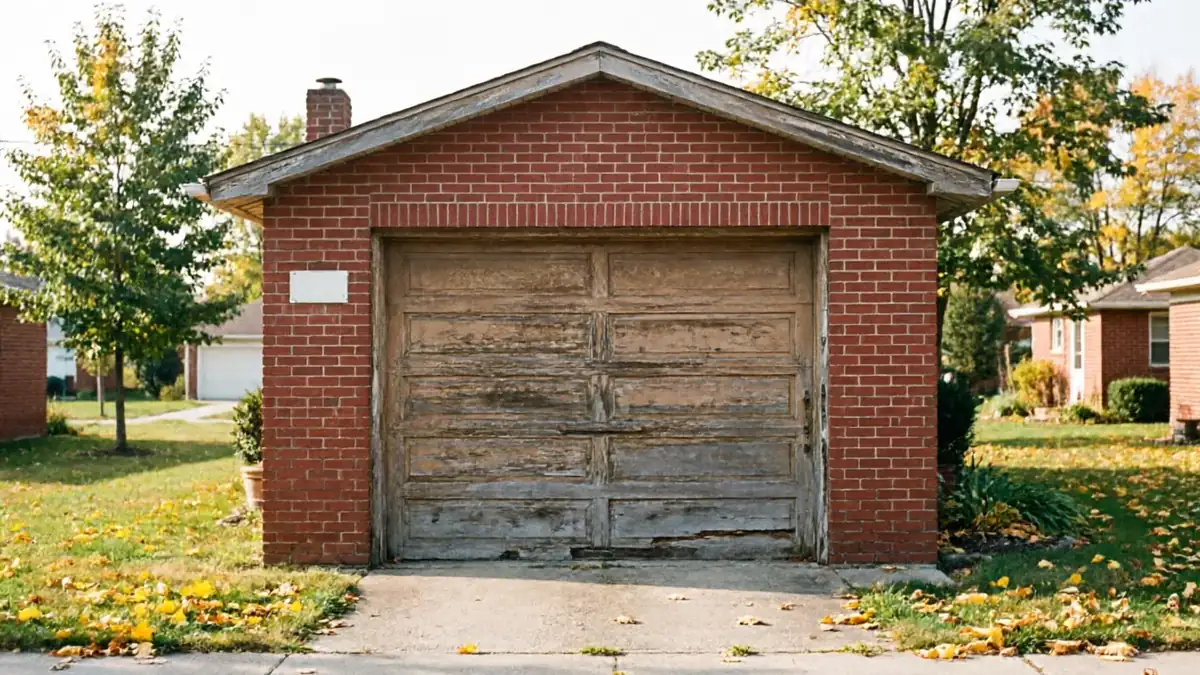
The garage has a weathered wooden door and red brick walls.

When It Stops Being a DIY Job

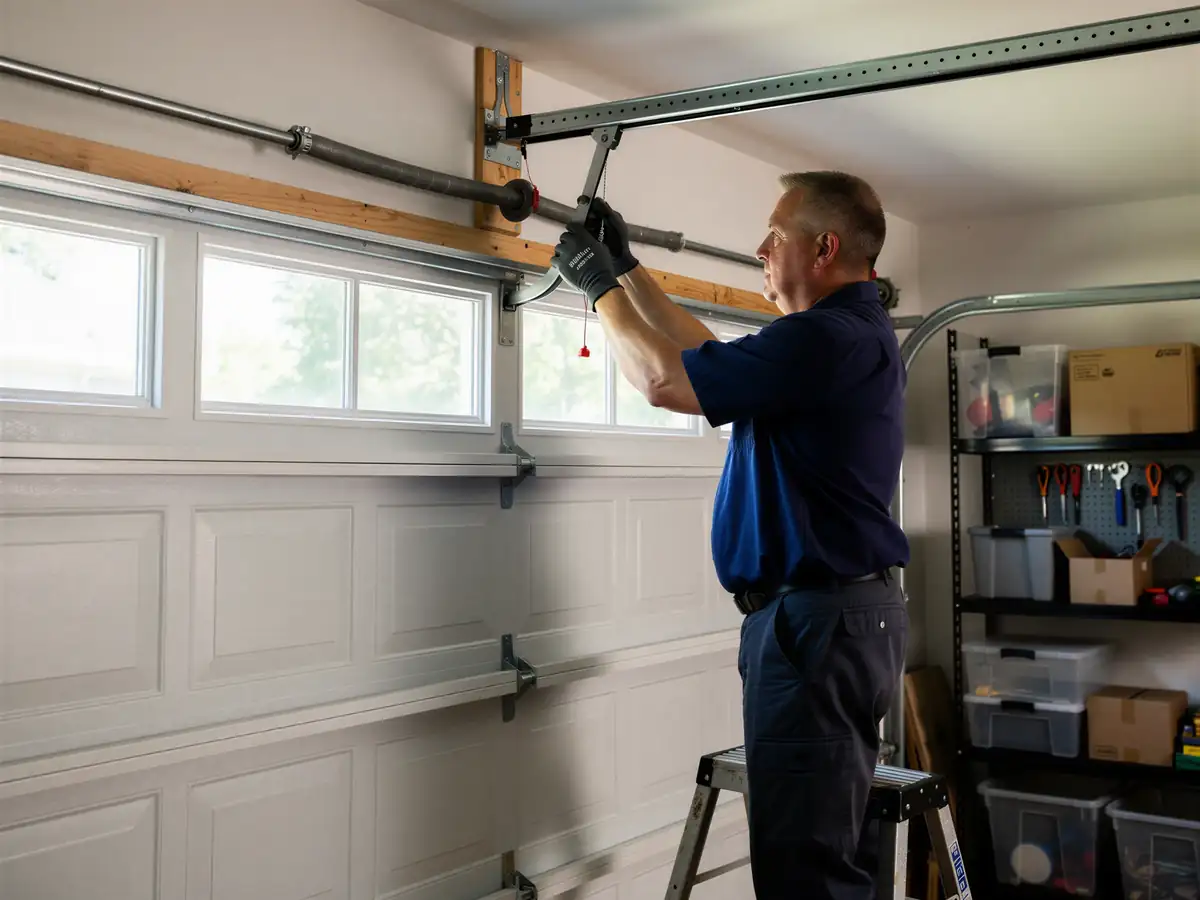
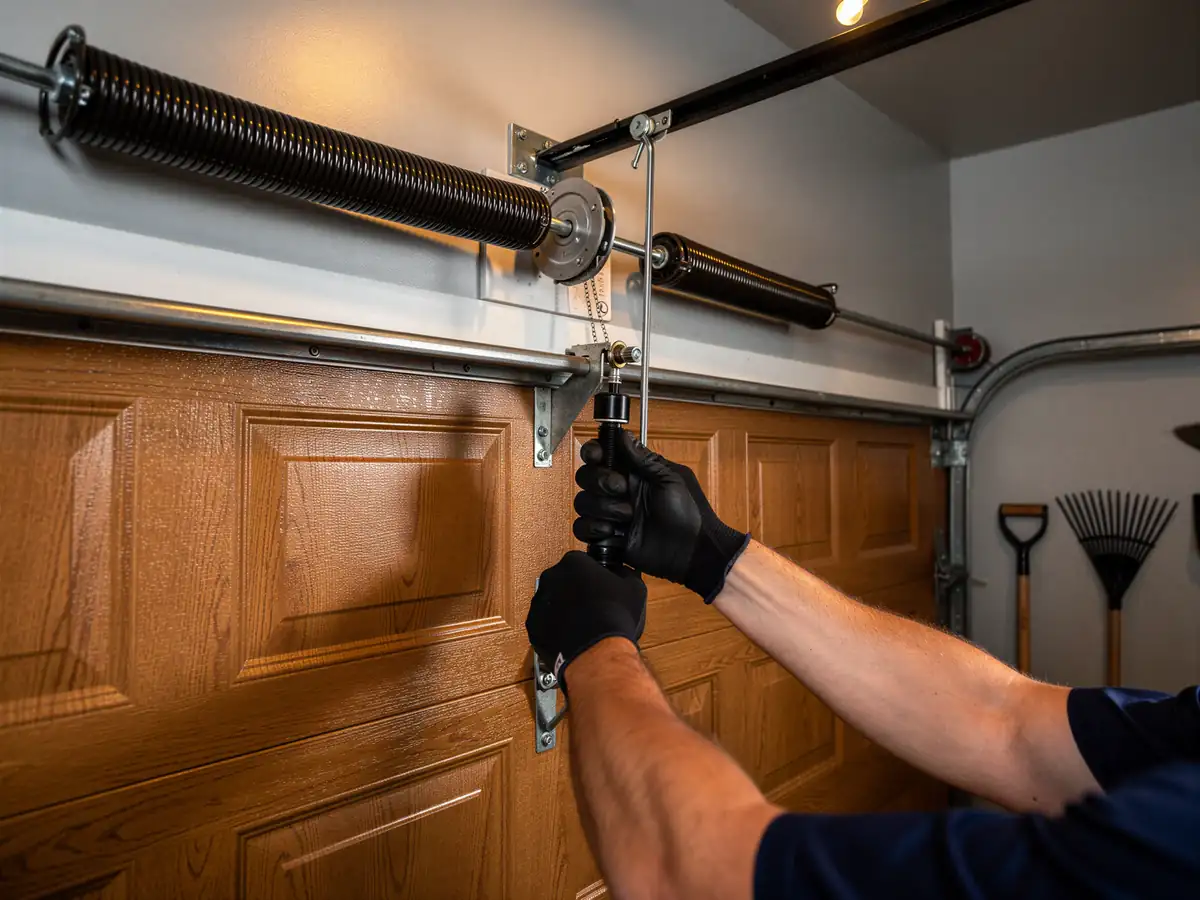
If your house was built anywhere in the 1955-2004 run that makes up most of Lakeville's housing stock, there's a decent chance the garage door or its opener predates a remodel you did somewhere else in the house. A sagging torsion spring, a bent track, or an opener that grinds before it lifts are all jobs a homeowner can look at but shouldn't finish alone. Torsion springs store enough force to break a wrist or worse, and on a door built before 2000 the spring size and drum setup often don't match what's on the shelf at a hardware store. Once you're past lubricating hinges and tightening visible bolts, you're into territory where the wrong part under tension is the actual risk, not the inconvenience of a stuck door. We'll tell you straight when a job is a twenty-minute fix and when it needs a second pair of hands and the right cable puller. That's not us protecting the bill - it's just where the line actually sits on a door this age.

What to Check

Start with the hinges and rollers, since houses from the 1984 median build year are now at the point where steel rollers have usually worn oval instead of round, and that shows up as noise and uneven travel long before the door fails outright. Look at the bottom panel for rust creeping up from the weather seal - on a 1980s or 90s door that panel is original steel, not the galvanized coating used today. Check the track mounting brackets for play; thirty-plus years of seasonal frame shift can loosen lag bolts without any obvious damage to the door itself. If the opener is original to a house from that era, the logic board and drive gear are both near or past their expected life, and a failing capacitor often looks like a weak motor. None of this means replace the whole unit - a worn roller set or a resealed bottom panel is a fraction of the cost of a new door, and on hardware this old that's usually the right call first.

How Local Conditions Play In

Lakeville sits in a cold climate band, which means the repair-or-replace math isn't just about age, it's about what cold does to aging steel and rubber. A bottom seal that's cracked lets cold air and meltwater into the garage every winter, and on an older door that seal is often a size nobody stocks anymore, which pushes the job toward a full panel swap rather than a patch. Torsion springs lose tension faster with repeated cold-to-warm cycling than they would in a mild climate, so a spring that's original to a 1980s or 90s install is working harder every winter than it did the year it was put in. Steel panels from that era also flex more in sustained cold, and a door that already has a soft spot from age will show it first on a sub-zero morning when the opener strains to lift it. None of this is unique to one house - it's the pattern across the 1980s-90s stock that makes up most of the 24 areas we work in.

The Situation

Across the service area there are roughly 53,681 owner-occupied houses out of about 120,874 households, and median household income here runs around $99,460 - numbers that matter because they shape what repair-versus-replace actually looks like for most calls we take. A household at that income level can usually absorb a spring replacement or a panel swap without much debate, but a full door replacement is a bigger decision, and we won't push it if the existing door still has useful life in it. The honest limit here: if your opener or door was installed in the 1990s and the track, drums, and panel are all original, parts availability is the real constraint, not labor. Some older drum and spring combinations just aren't made anymore, and when that's the case, replacement ends up cheaper and faster than chasing down a discontinued part.
How it works

From “it’s stuck” to “it’s fixed”

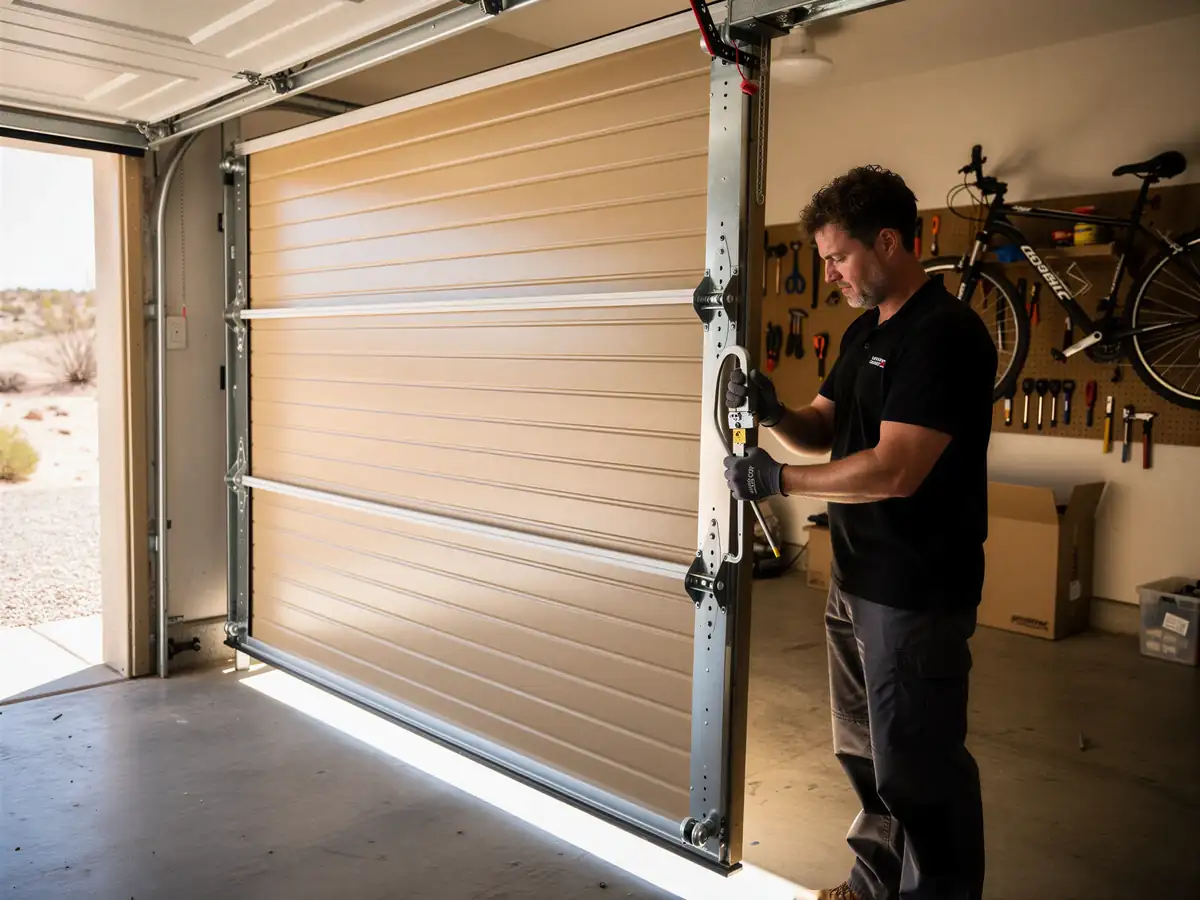
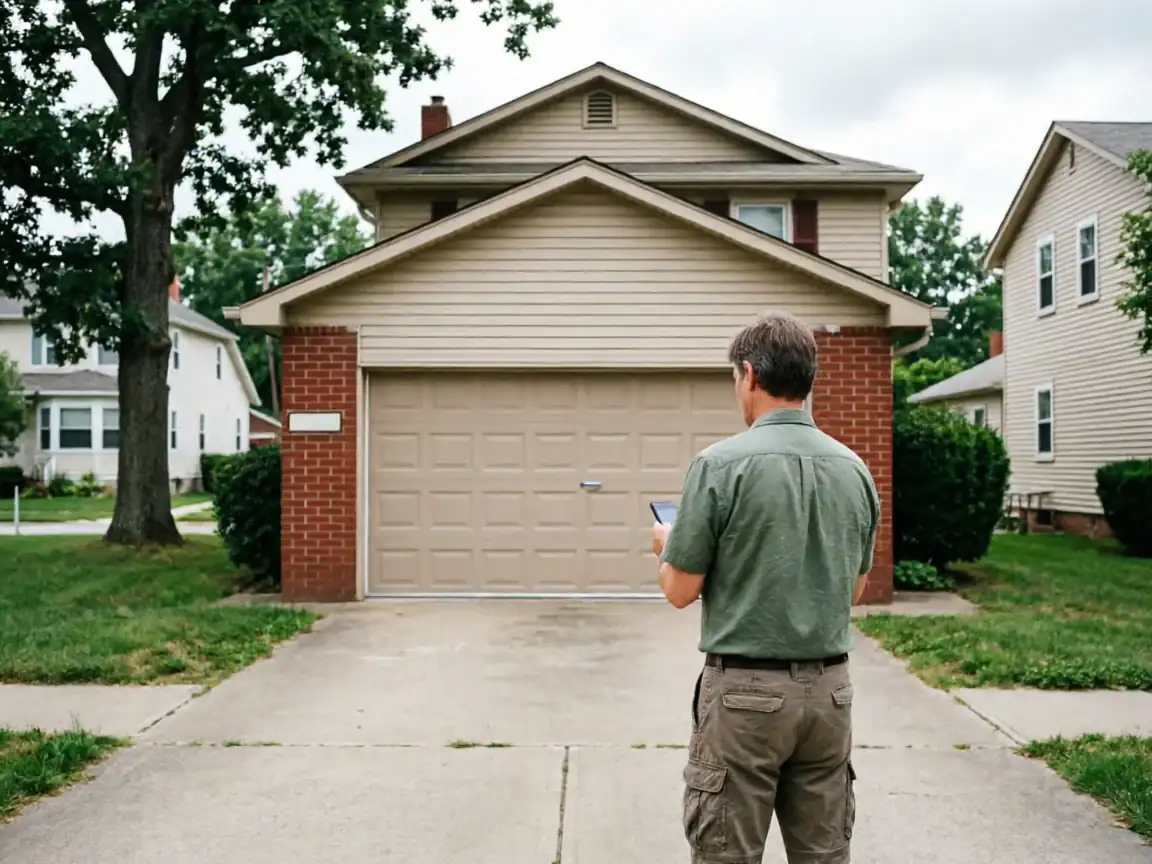
A technician stands in a driveway looking at a tan garage door on a house.

Tell us what’s wrong

Describe the symptom - won’t open, loud bang, opener runs but the door won’t move.

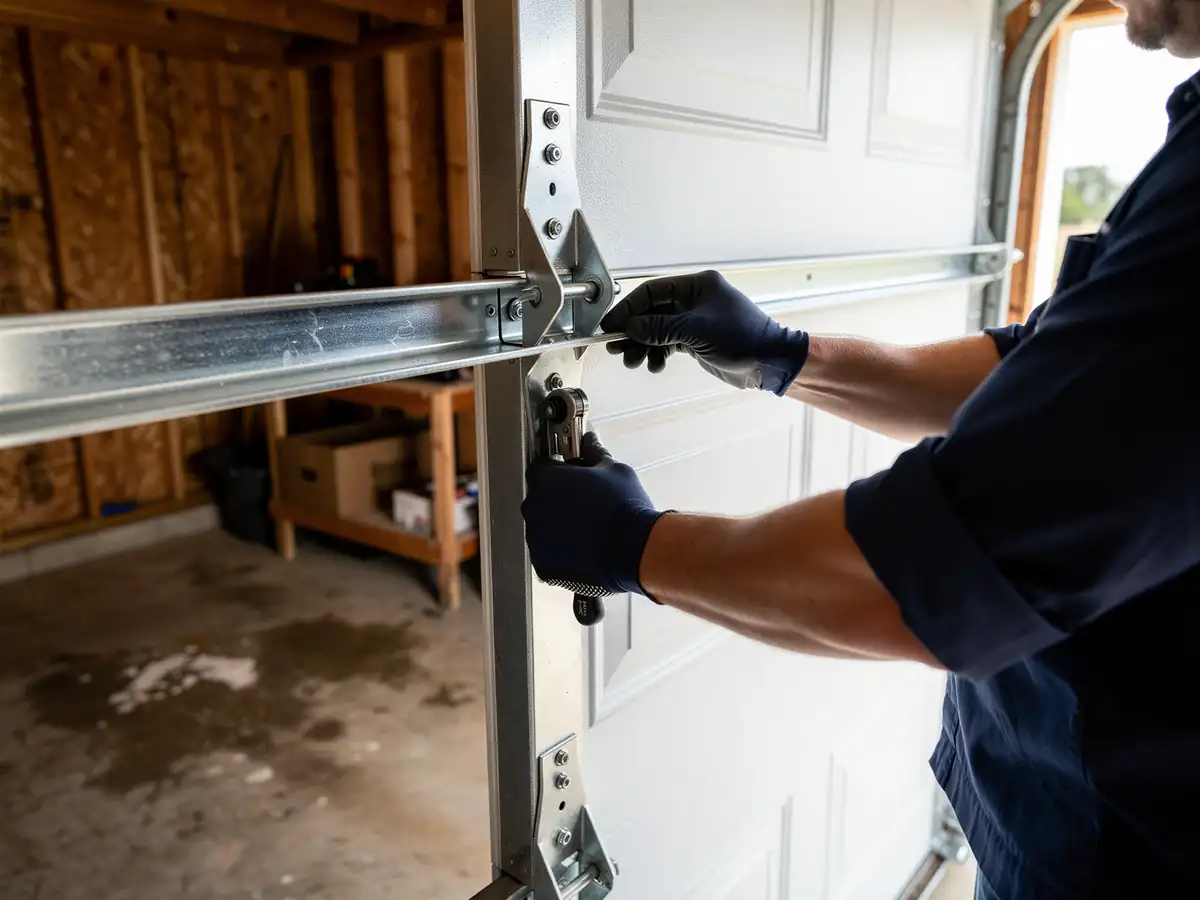
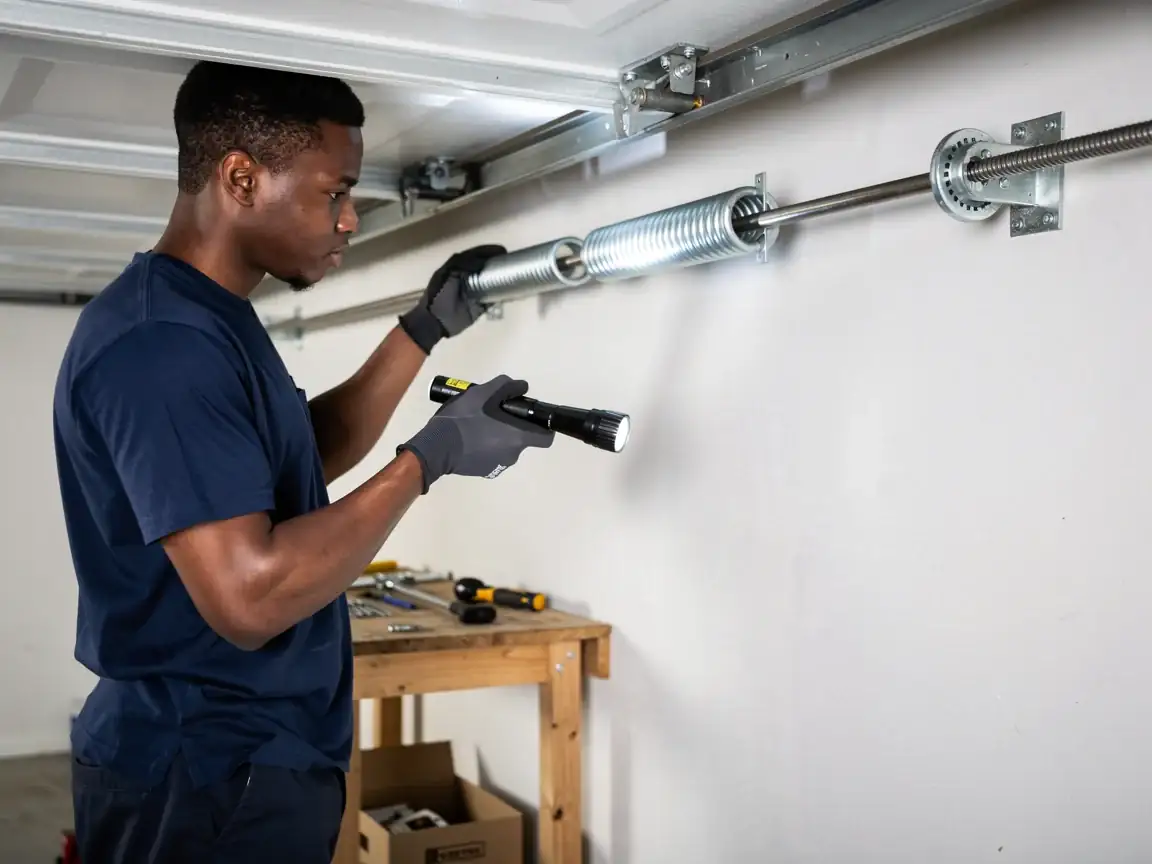
A technician holds a flashlight and works on a garage door torsion spring.

On-site diagnosis

A technician tests the door under power and by hand and finds what actually failed.

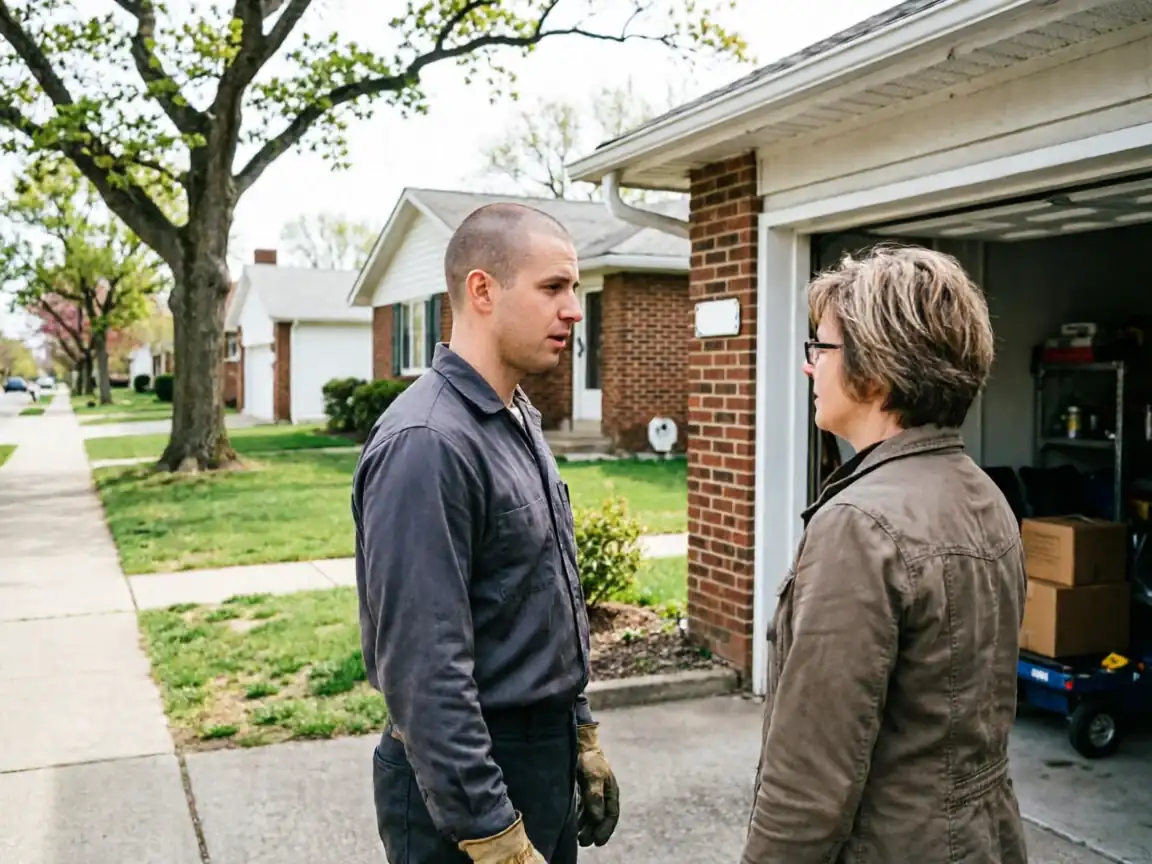
A technician in a gray shirt talks to a woman in a brown jacket outside a garage.

Clear, up-front plan

You get the fix that’s needed and what drives the cost - before any work starts.

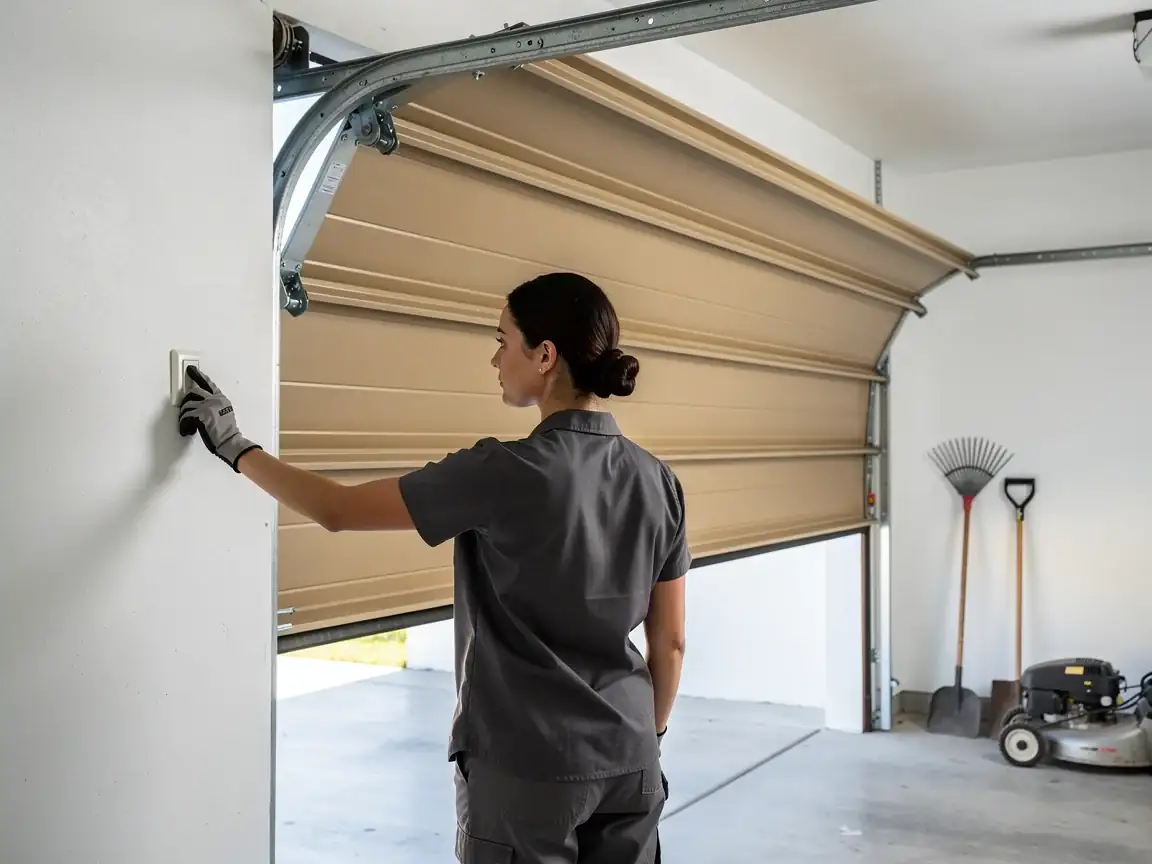
A technician in gray work clothes presses a button to open a tan garage door.

Repaired & tested

The repair is done, the door is set true and tested, and the work area left clean.

Not sure which repair your door needs in Lakeville, MN? Describe what it’s doing - every job starts with a diagnosis.

6areas covered
How we work

What to expect

Diagnosis firstEvery visit starts by finding what actually failed - not a pre-written parts list.
The right part for the doorSprings and openers matched to the door’s weight and age, so the fix holds up.
Straight answersWhen a repair makes more sense than a replacement - or the reverse - you hear it plainly.
Clean, careful workTension released safely, hardware set true, the door tested under power before we leave.
What we do

Garage Door Services

Repair and installation work for Lakeville homes and businesses.

Questions

Frequently asked

Straight answers about garage door repair in Lakeville. Still unsure? Ask us directly.

01My house was built in the 1980s - is the original garage door worth fixing?

Usually yes, if the panel itself isn't rusted through or badly dented. Most 1980s and 90s doors in this area have original steel panels that hold up fine once rollers, hinges, and the bottom seal are replaced. The opener is more likely to be the weak point than the door panel.

02Why does my old opener struggle more in winter?

Cold makes grease stiffen and springs lose tension faster, so an opener motor that was already working near its limit has to pull harder on a cold morning. On an opener original to a 1980s or 90s install, that extra strain often shows up as grinding or a door that reverses partway up.

03Can you still get parts for a door built in the 1990s?

Sometimes. Rollers, hinges, and standard-size seals are almost always available. Specific spring and drum combinations from certain 1990s manufacturers are a different story - those are the cases where replacement ends up being the more practical route.

Ready to get your garage door sorted?

Tell us what it’s doing and where you are in Lakeville - we’ll take it from there.

Request a QuoteCall