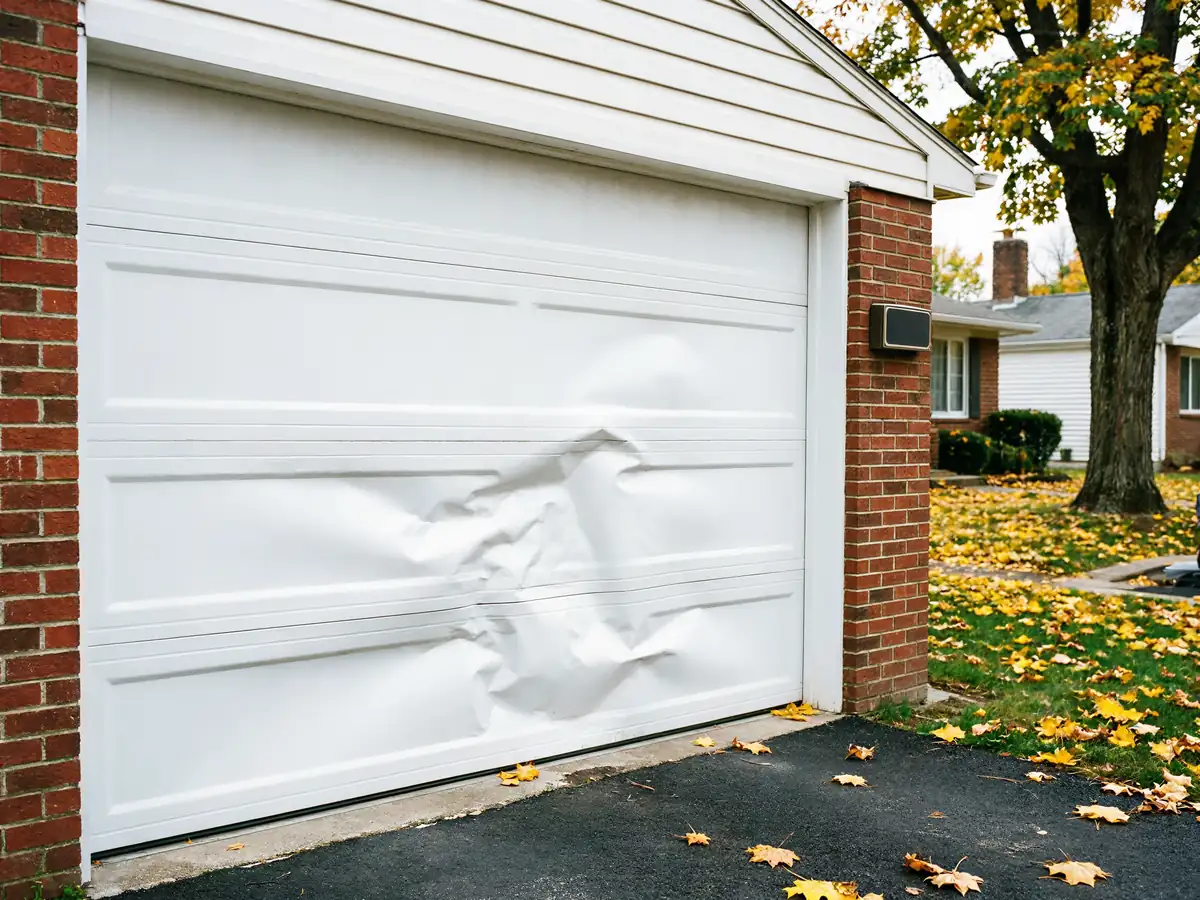
What Can Go Wrong
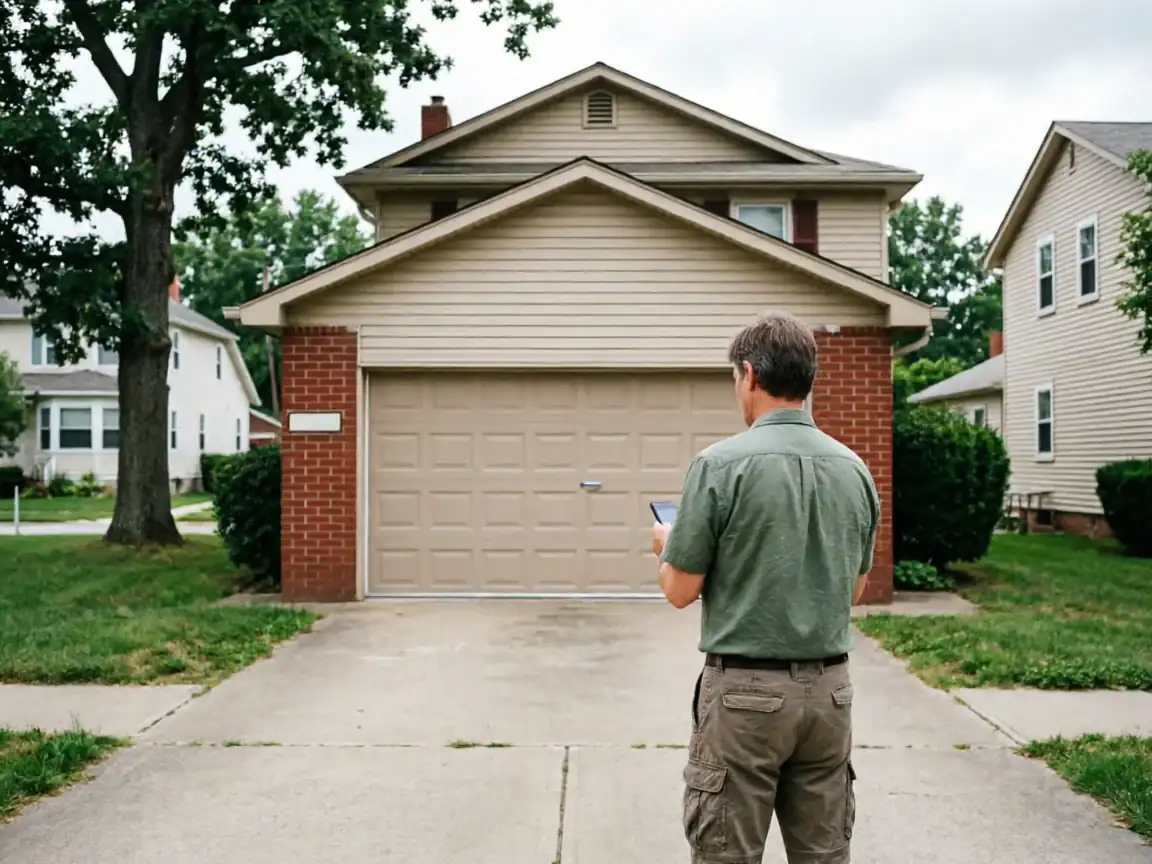
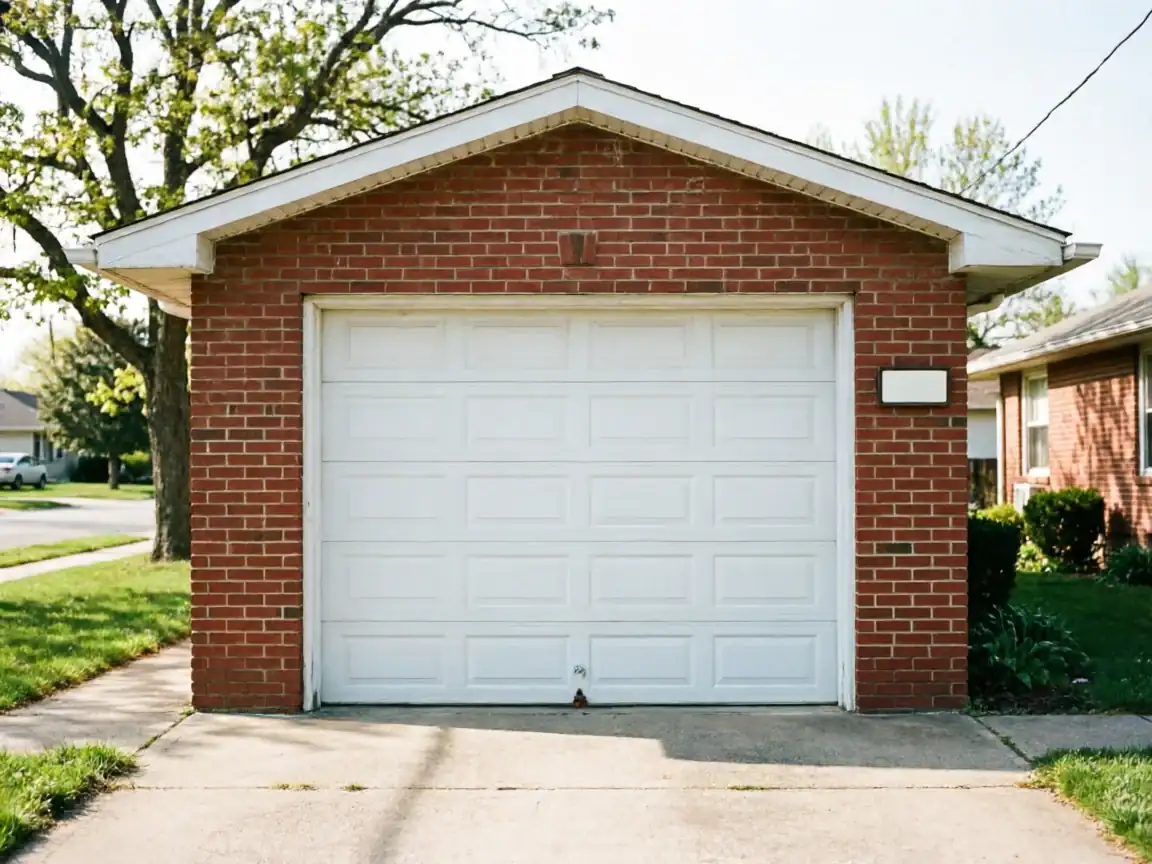
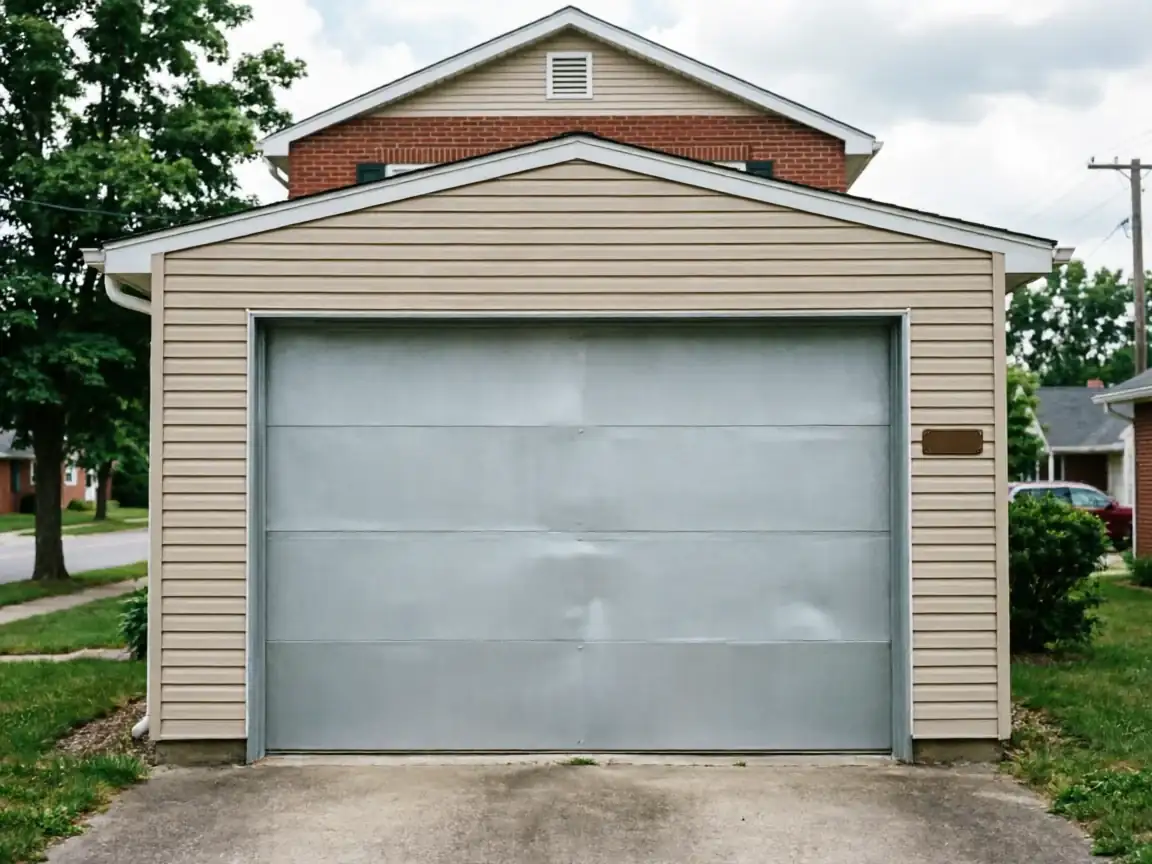
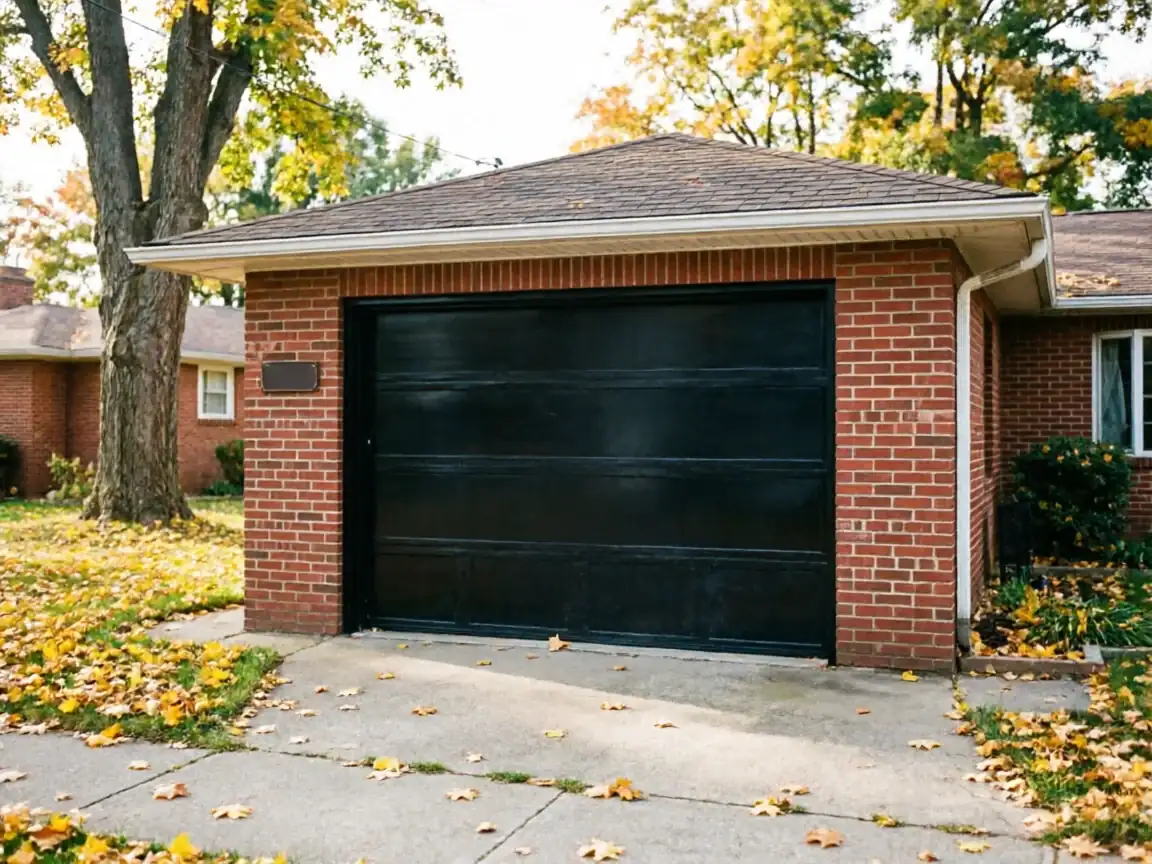
Most of the garage doors standing in Richfield went up around 1959, which puts them well ahead of the foam-core, multi-layer steel panels that became common later. A door from that era, or one replaced once since on the same frame, often runs thinner steel with little or no insulation backing. That steel dents easier - a bumper tap, a stray basketball, a kid backing a bike into it - and once one panel bows, the whole section can bind against the track. On these older framed openings, the panel seams were never built to flex the way a modern sectional door does, so a dent in one spot puts strain on the hinges beside it. We see cracked panel skins where the steel fatigued at the hinge screw, and we see panels that were painted over a rust bubble years ago and are now thinner than they look. None of that is a reason to replace the whole door - it's a reason to replace the panel before the damage spreads to the opener or the track.
Doing It Yourself
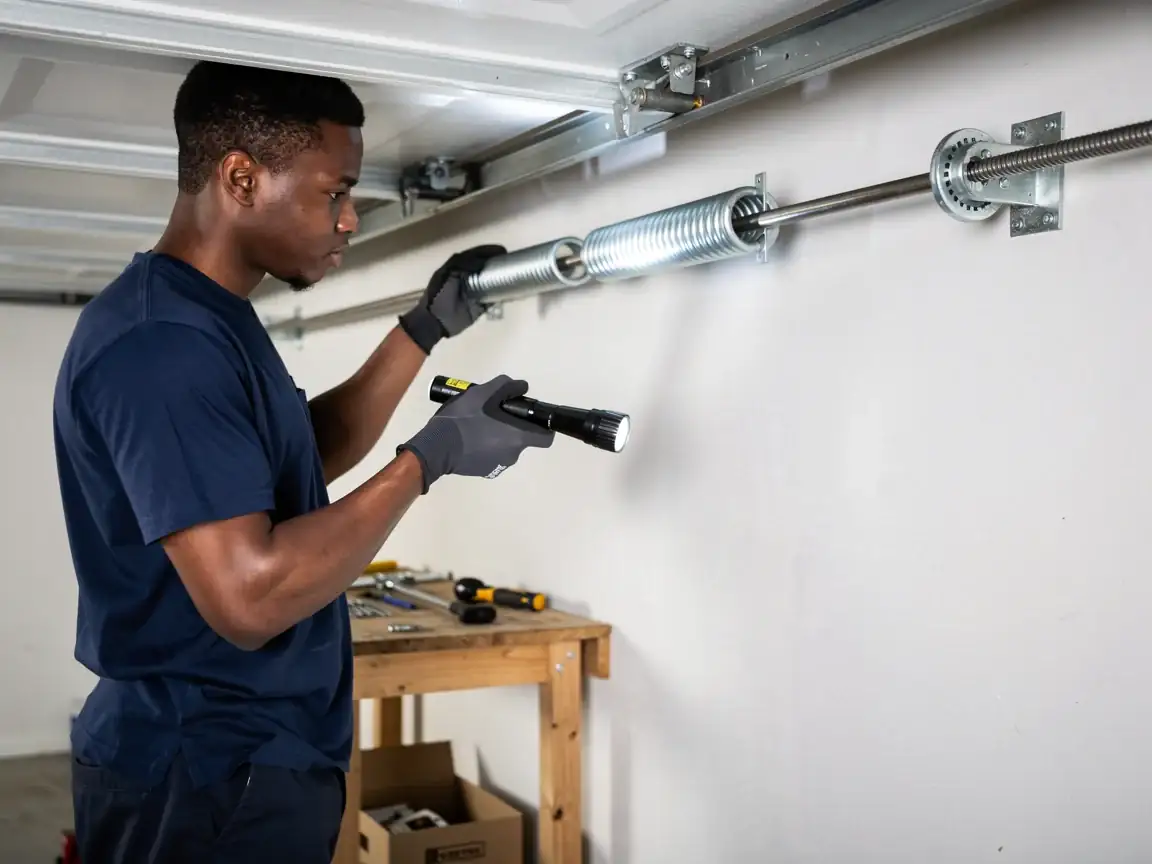
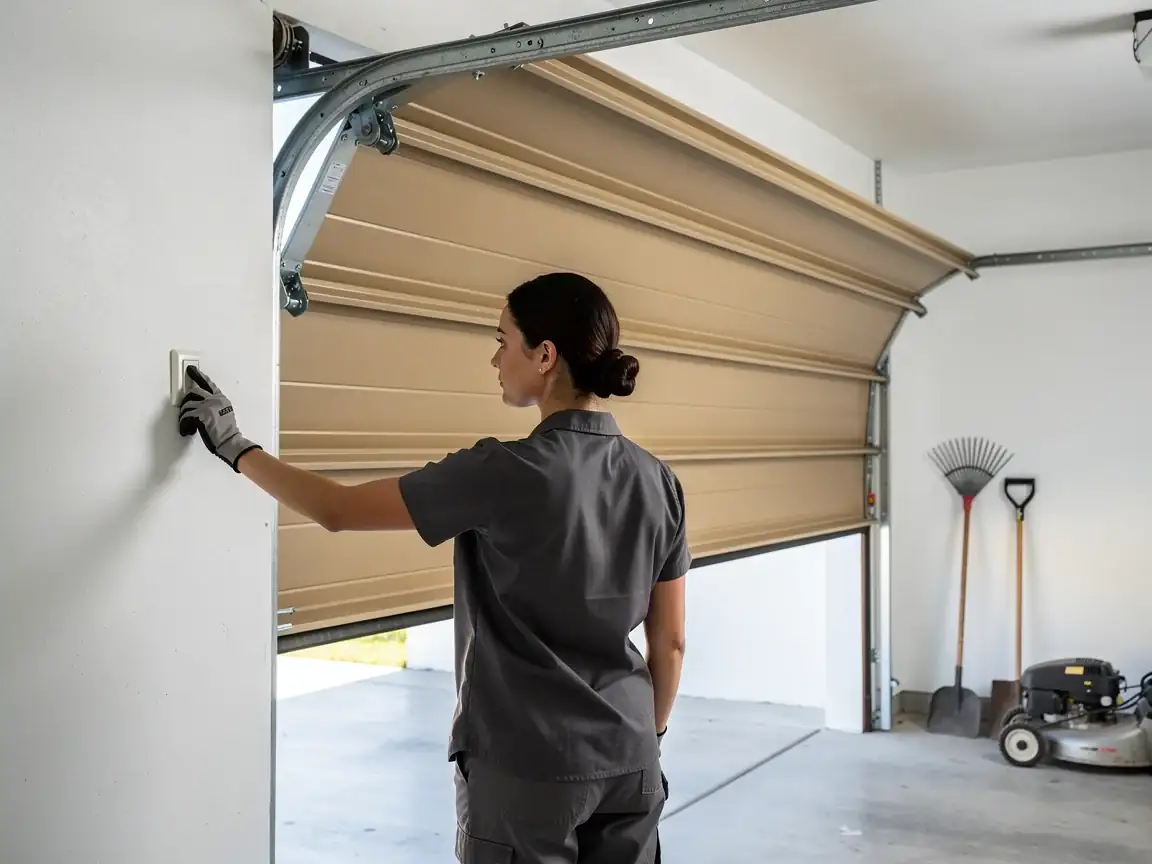
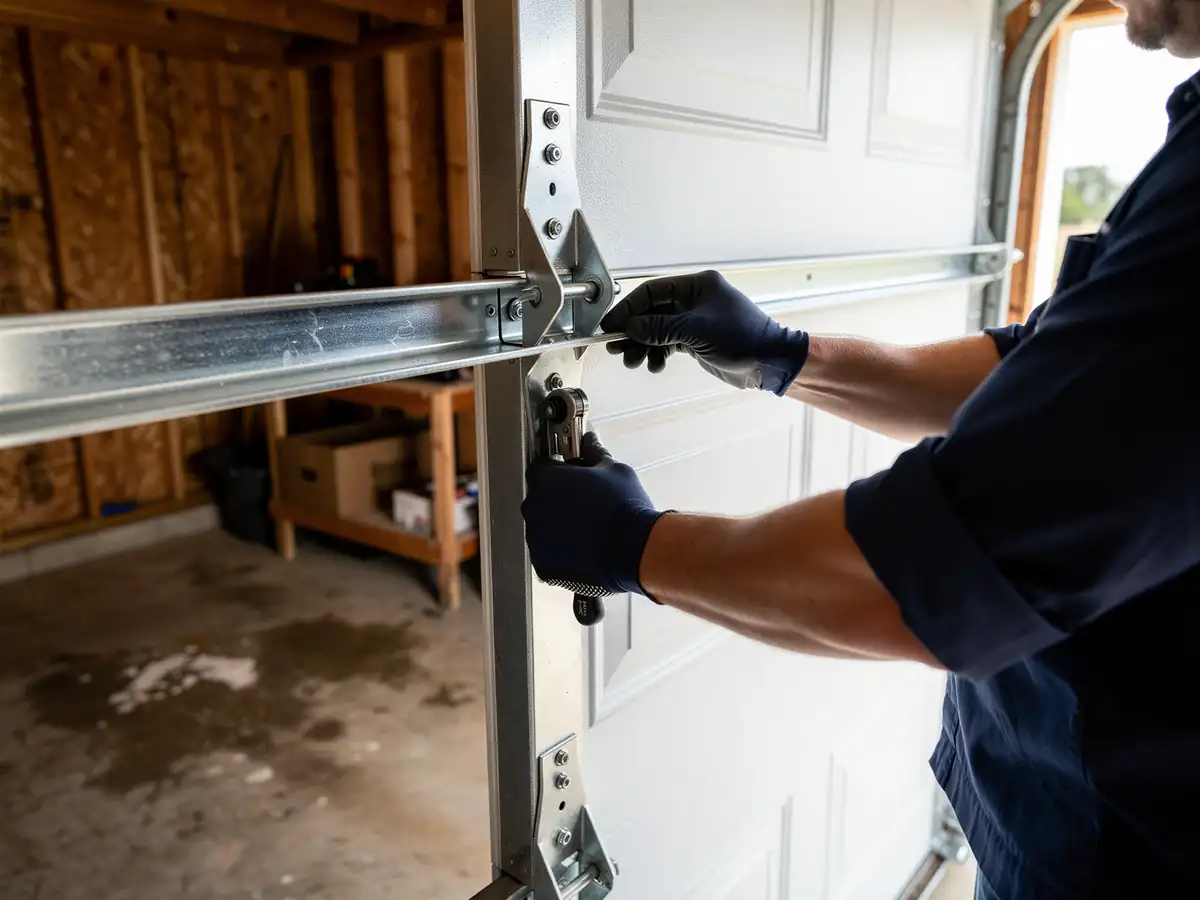
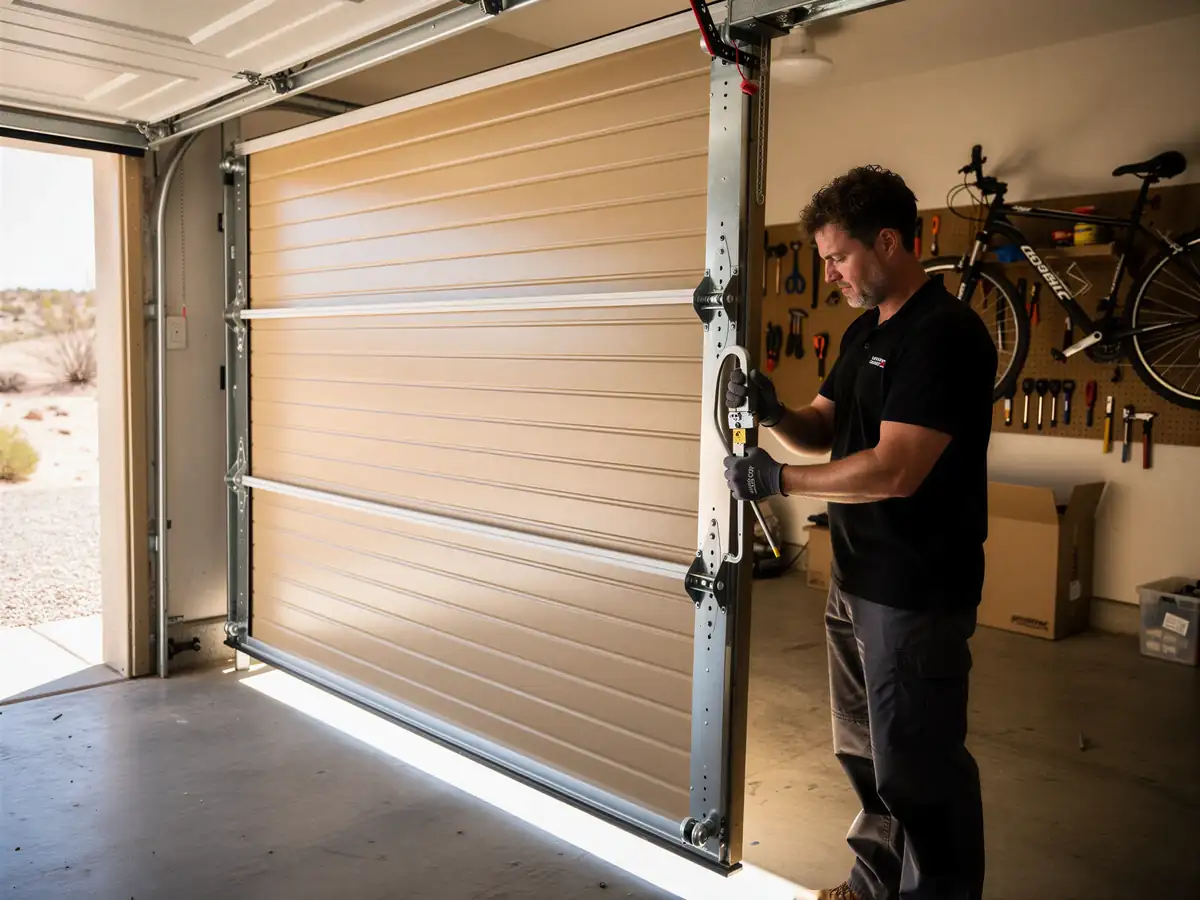
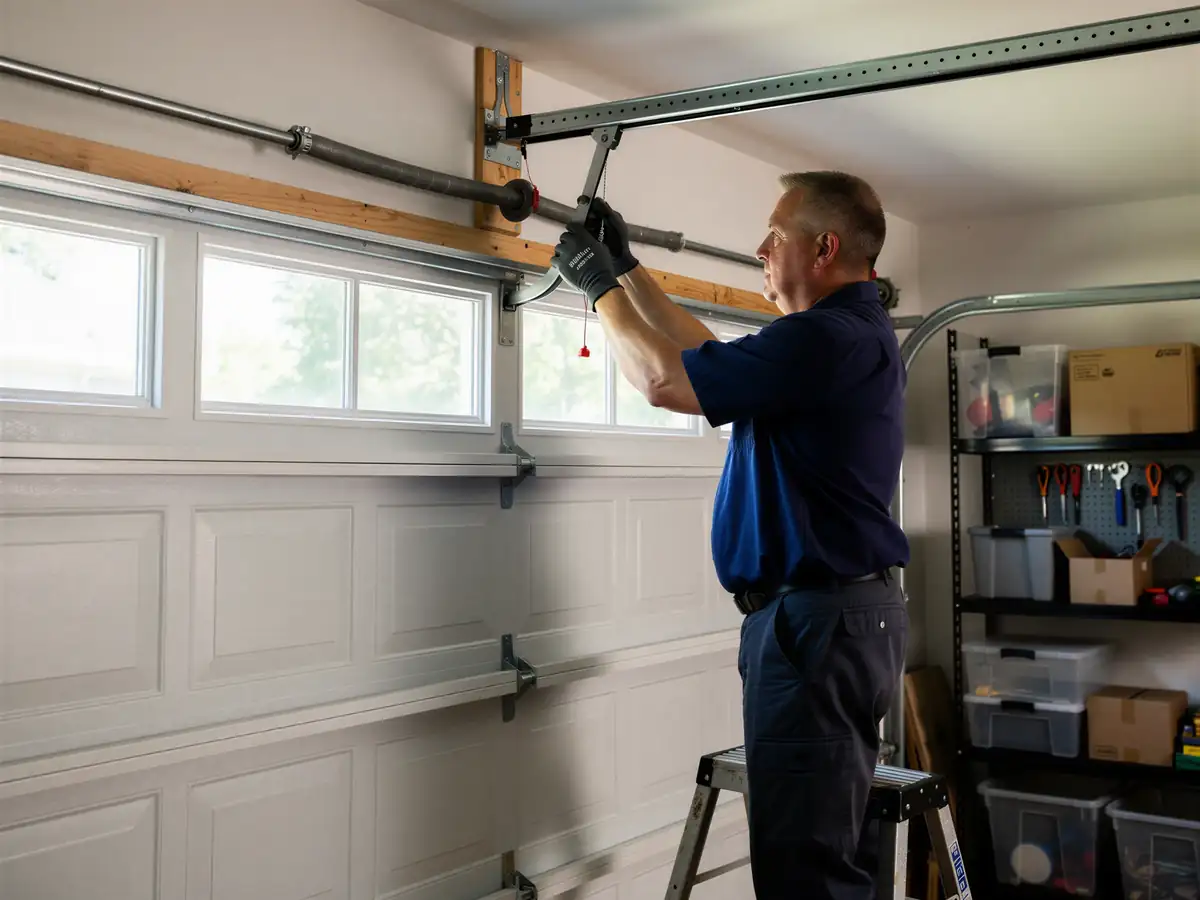
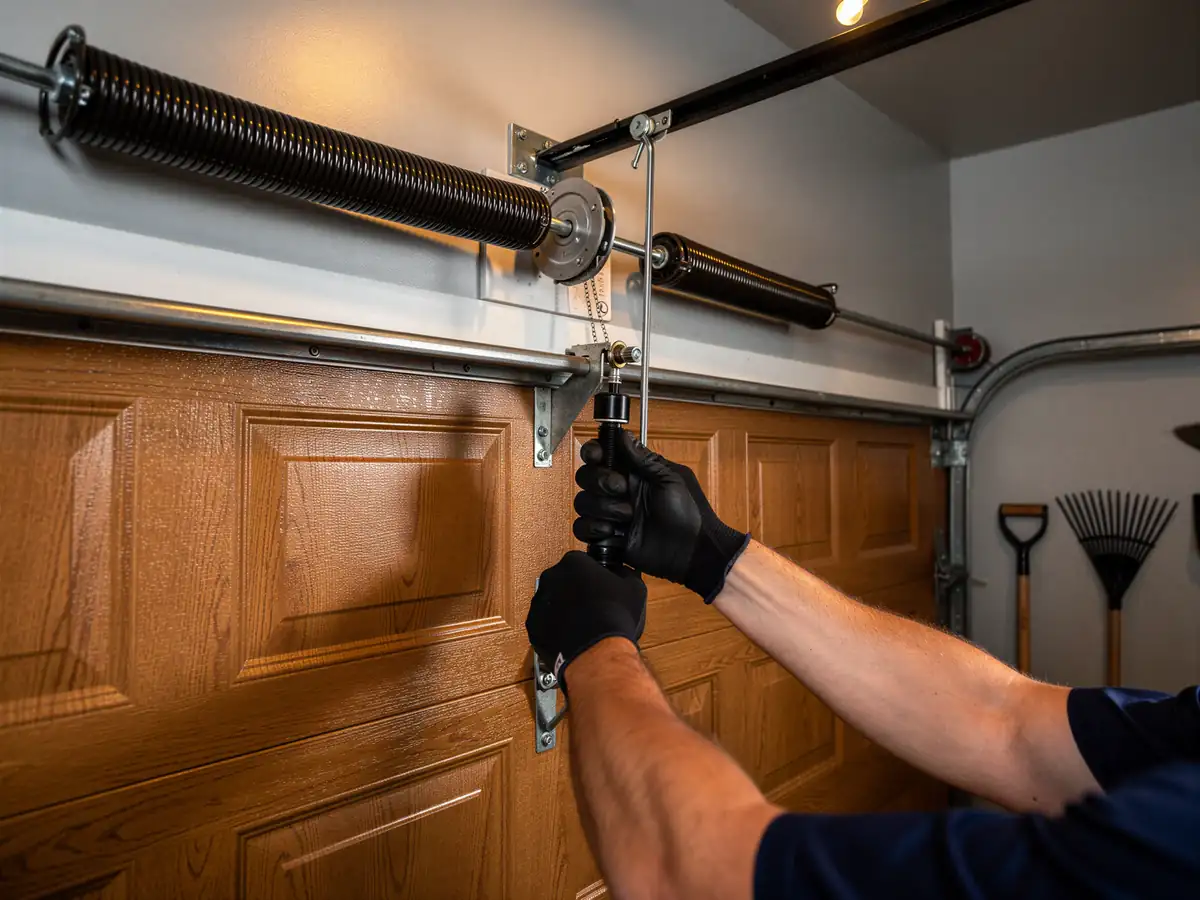
A single panel swap looks simple from a video, and on some doors it is. The trouble starts with matching steel gauge and profile to a door that's 60-plus years old in design - the hardware stores don't stock that panel, and a mismatched one will look wrong and sit wrong against the seams on either side. If the door is still running on its original torsion spring, pulling a panel means working next to a spring under real tension, and that part has hurt people who treated it like a bolt. We'll say plainly: if your panel is cracked but the door still runs true on the track, a careful DIY swap of a bottom panel (the one that takes the most hits) is reasonable for someone comfortable with tools. Anything above eye level, or any door where more than one panel has gone, is not a one-afternoon job - get a second set of hands or call it in.
The Cost of This Job
We don't have a published price list for this page, and quoting a number without seeing the door would be a guess - panel cost swings on how many sections are damaged, whether the color and texture need matching on a visible garage, and whether we find spring or track wear once the panel's off. What we can tell you is what drives the cost up or down: a single bottom panel on a door that still tracks straight is the cheap end of this job; a full-width panel high on the door, or damage that's pulled a hinge or roller out of line, pushes it toward the cost of replacing more of the door. Richfield's median household income here runs lower than some of the suburbs we cover, and we try to steer customers toward the repair that actually needs doing rather than a bigger sell.
What Causes It Around Here
Minnesota's cold climate band puts real stress on an old steel panel twice a year - the freeze-thaw swing that cracks pavement does the same slow work on a panel seam that's been flexing in and out of true for decades. On a door built to the standards of 1959, there's usually no thermal break between the steel skin and the frame, so the panel itself does more expanding and contracting than a modern insulated door would. Add road salt tracked up a short driveway slope and splashed onto the bottom panel all winter, and that's where we find the rust blisters that eventually crack through. It's not dramatic - no single storm does this - it's accumulated years of a panel never designed for the swing this climate gives it.