Doing It Yourself
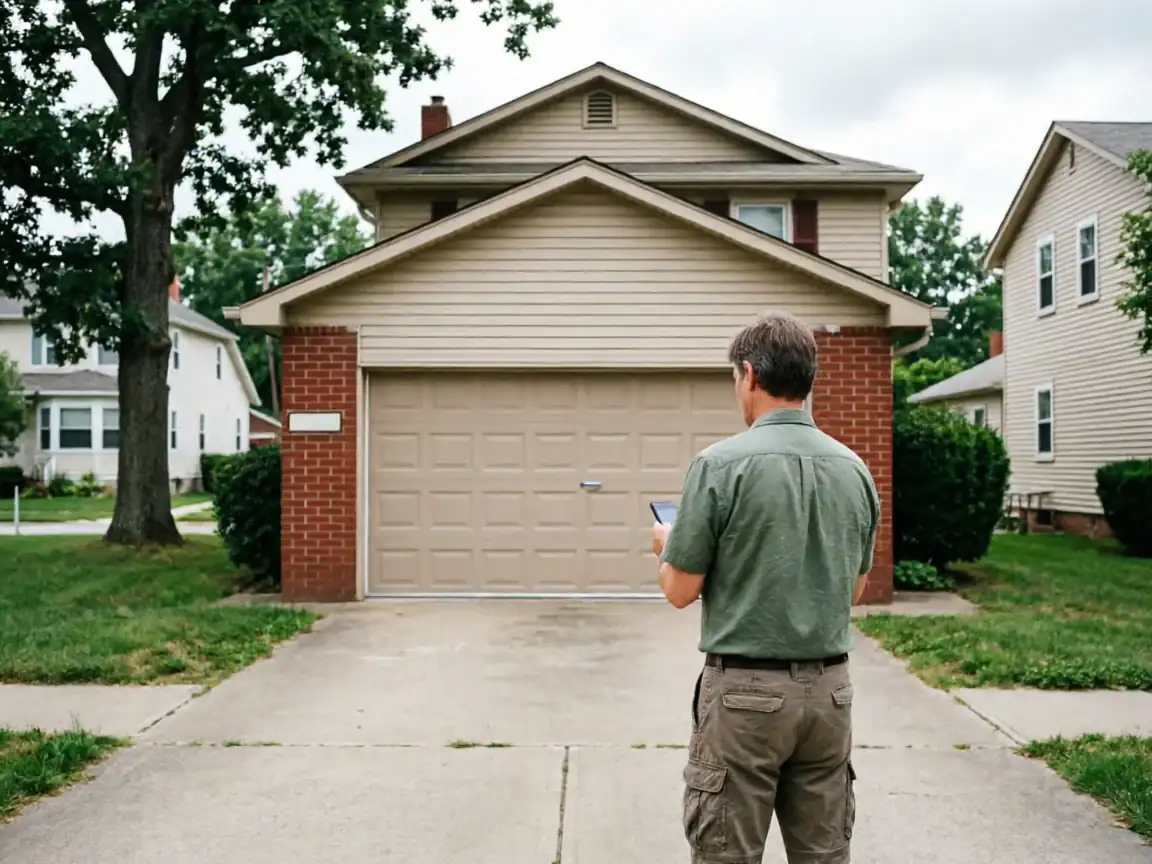
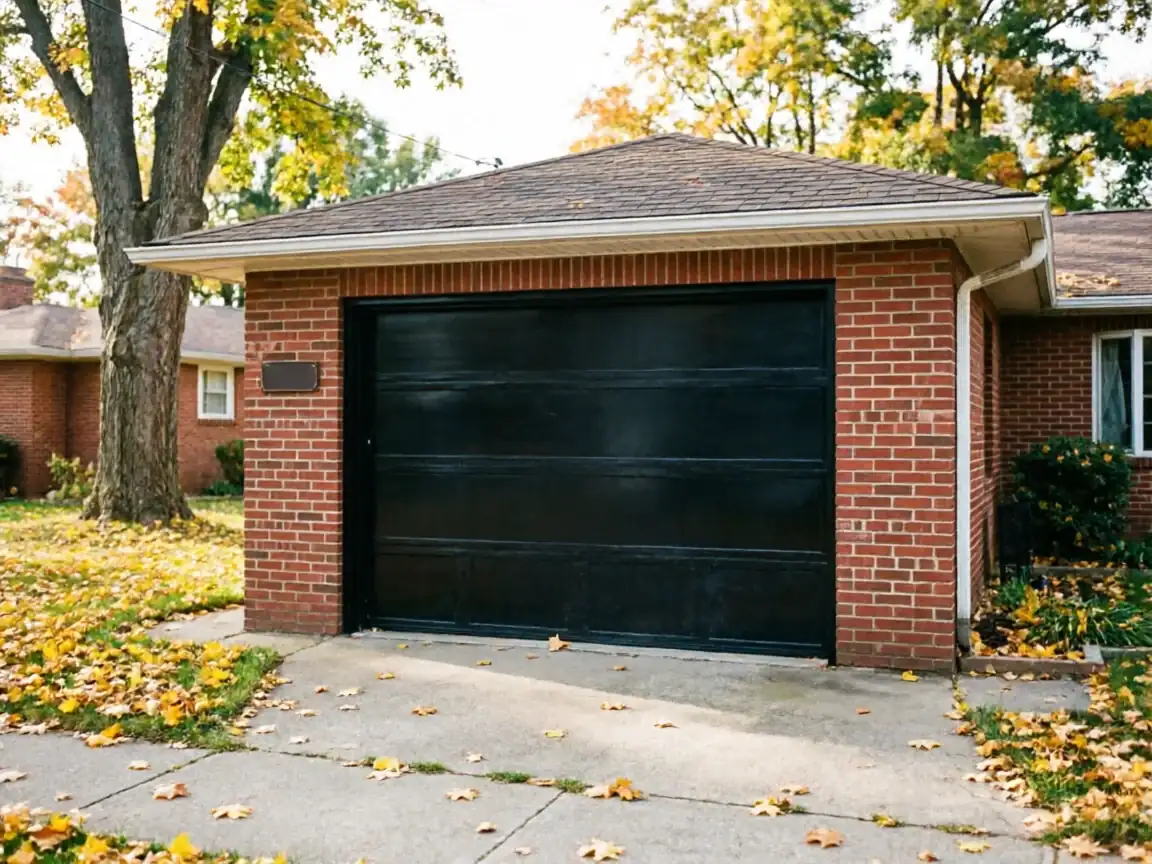
Chanhassen's housing stock centers on 1993, which means most garage doors here left the factory with galvanized lift cables rated for a service life that's now well behind them. A cable that's three decades old doesn't usually snap clean - it frays at the drum, or one strand lets go while the rest holds, and the door starts riding crooked in the track. That crooked ride is the tell that you're dealing with a cable problem, not just a noisy opener.
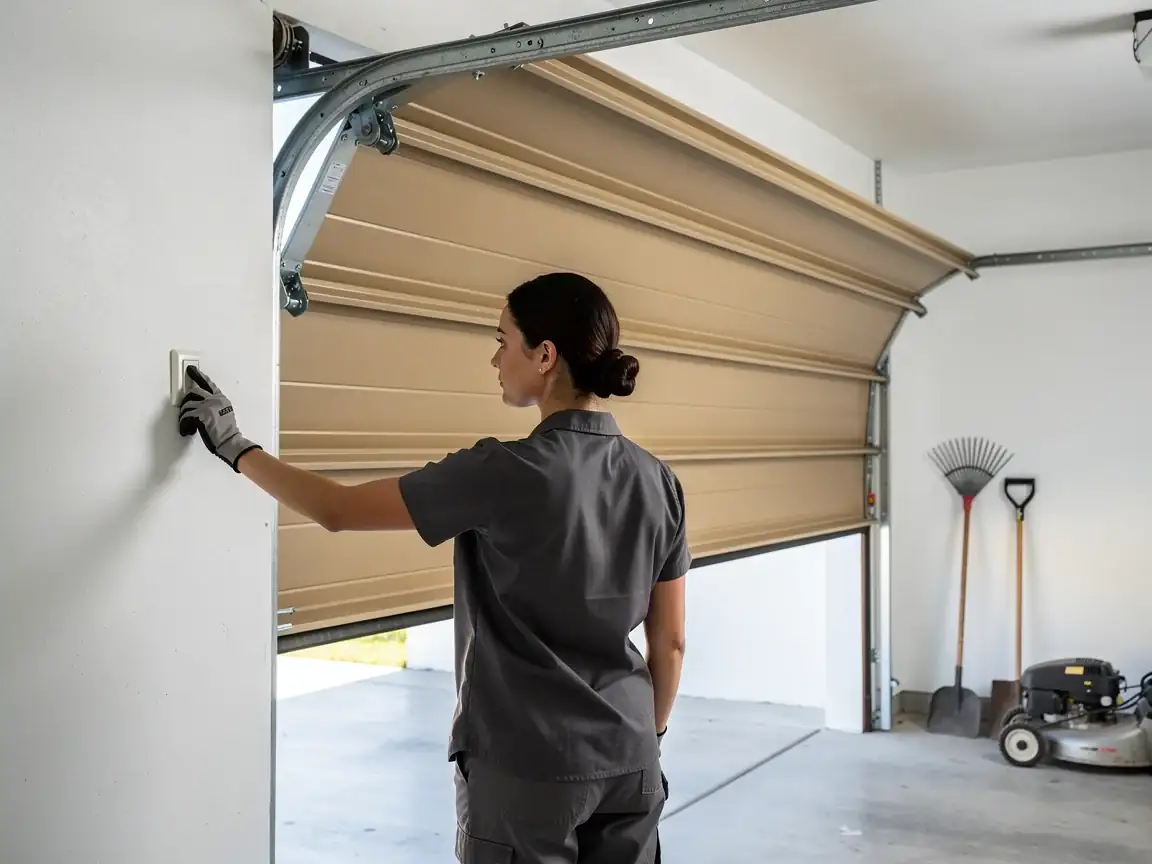
This is not a job to do yourself. The cable runs under the full tension of the spring system, and if you unhook it wrong while the spring is still loaded, the door or the hardware can come down fast. If one cable has gone, check the other side too - on a door installed in the early 90s, both cables are the same age and wearing at close to the same rate, so a single broken cable is often the first sign the second one is close behind. Don't try to rig a temporary fix with wire or rope; it won't hold under a 150-plus pound door and it voids any chance of the repair being done right.
What the Repair Takes
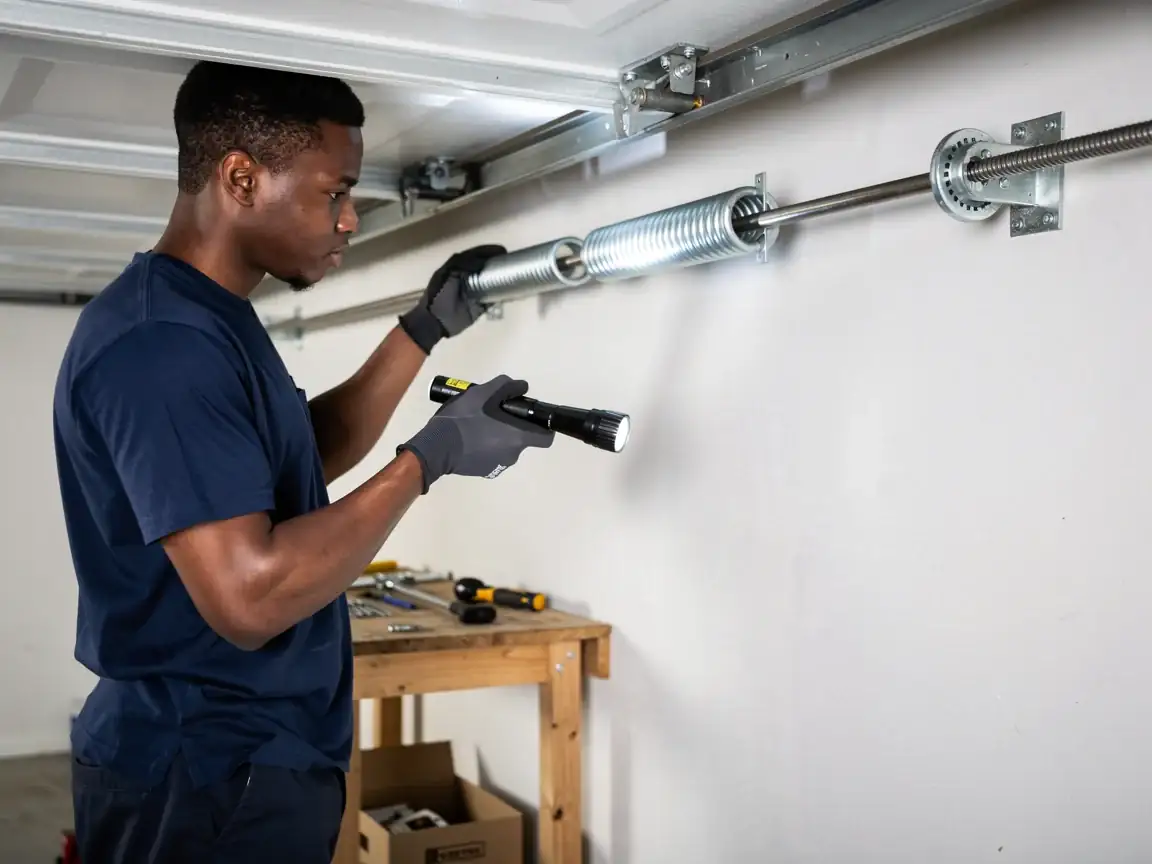
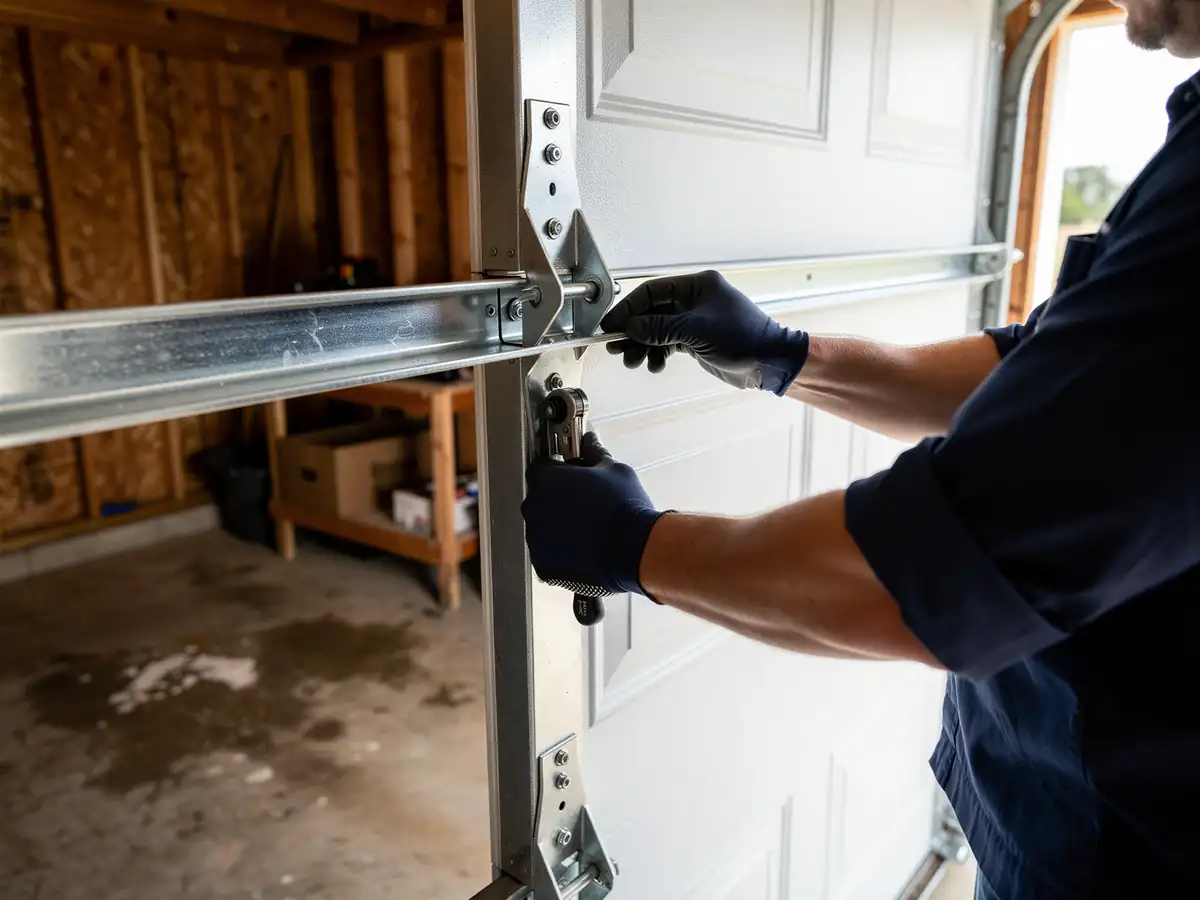
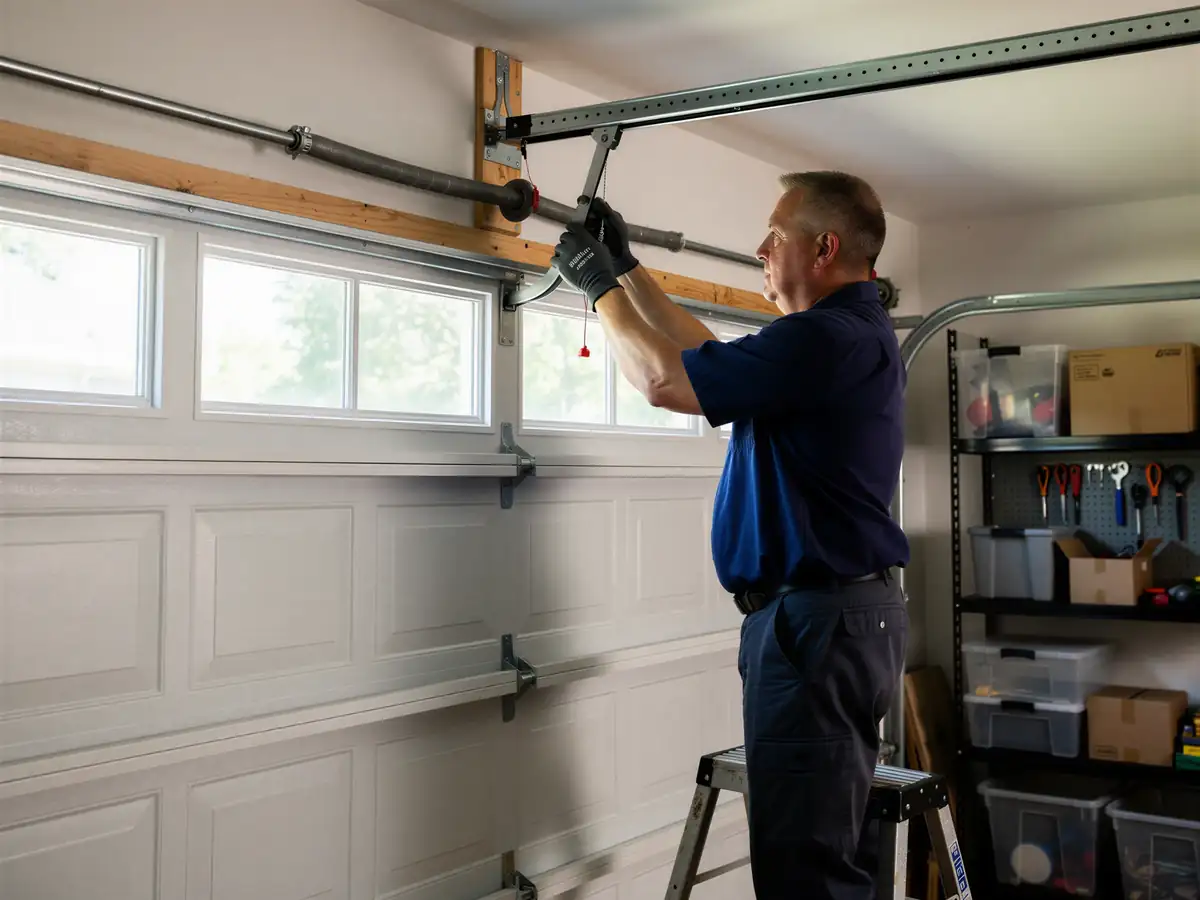
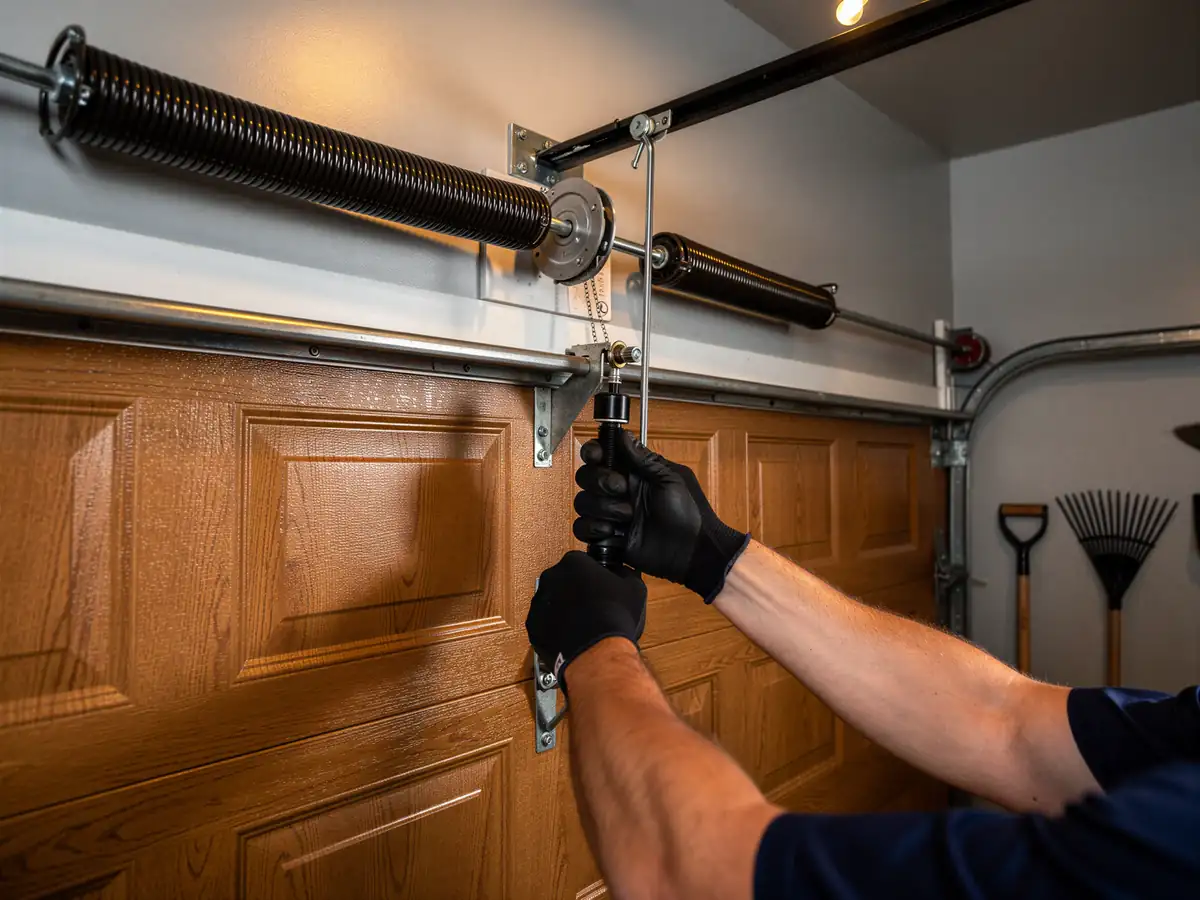
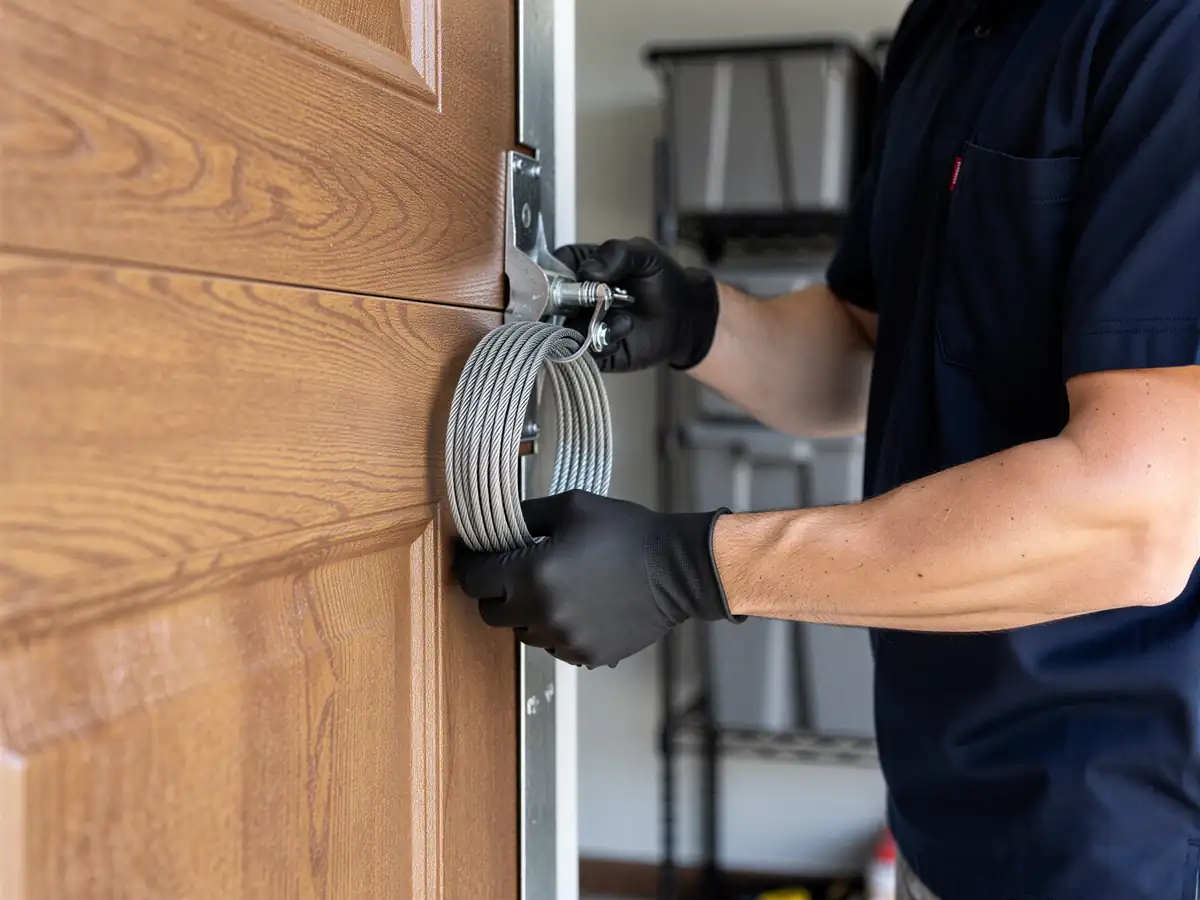
A straight cable replacement on a residential door is a controlled job: clamp the spring, release tension, pull the old cable off the drum, measure and cut the new length, and re-tension evenly on both sides. Even tension matters more than people think - a door that's off by even a quarter turn on one drum will pull to one side every time it runs, and that uneven pull is what chews up a roller or track early.
On doors from the early-to-mid 1990s we also check the drums themselves. If the cable wore a groove into the drum before it failed, the drum needs replacing along with the cable, or the new cable will fail the same way inside a year. We also look at the bottom brackets where the cable anchors to the door - on a door this age, those brackets have usually taken 30 winters' worth of expansion and contraction and are worth a look even if they're not the reason for today's call.
What Is on the Truck
Because this part of Minnesota sits in a cold climate band with real seasonal swings
We carry cable in galvanized aircraft-cable spec sized for standard 7-foot and 8-foot residential doors, plus the drums, end bearings, and bottom brackets that commonly need replacing alongside a cable on a door from the 1993-era build window. We stock both extension and torsion-style cable, since Chanhassen's housing spans enough years that either setup shows up on a given job.
One limit worth being upfront about
If a door uses a less common cable length or a specialty drum from a manufacturer that's since changed their spec, that part isn't something we carry on the truck, and the job may need a return trip once it's ordered. That's uncommon, but it happens more on older or imported door models than on the standard steel sectional doors built through the 90s and 2000s.
The Cost of This Job
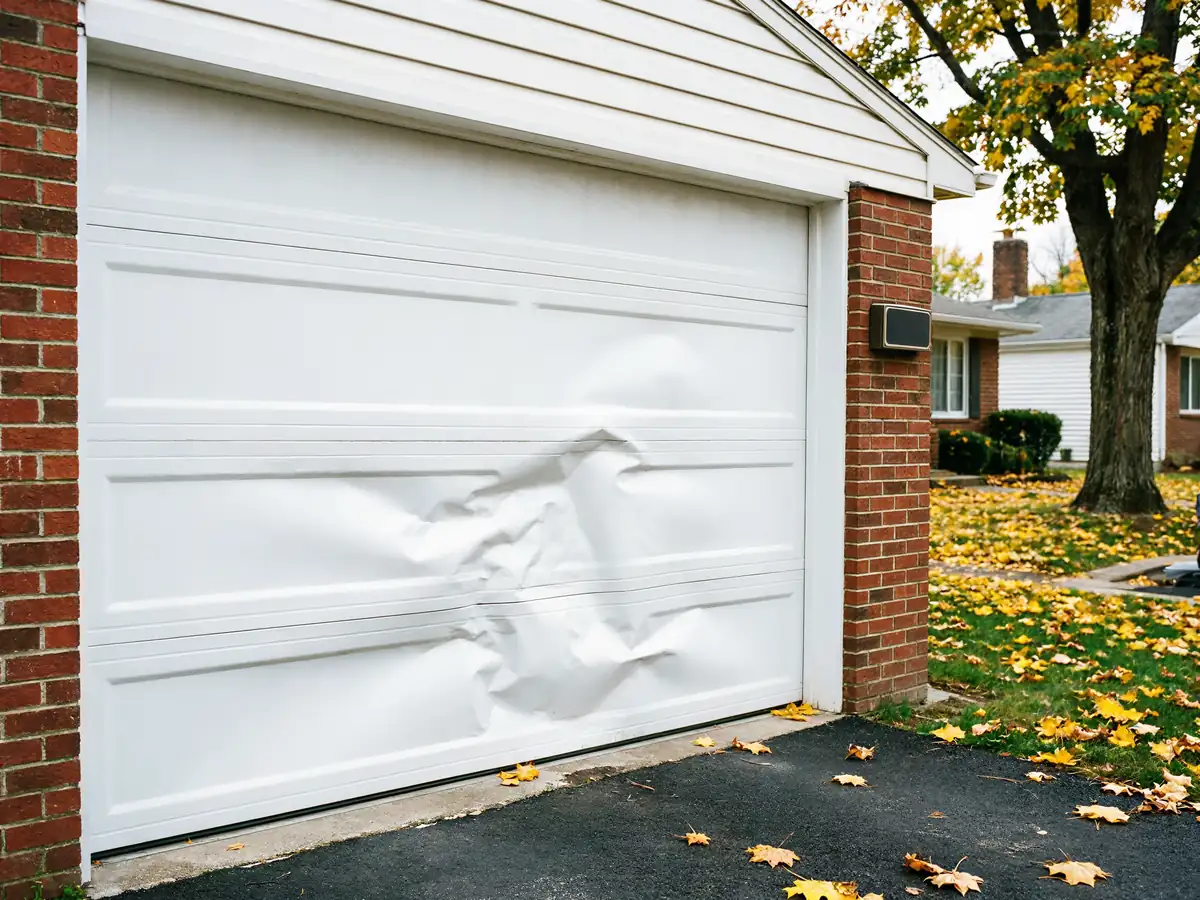
Cable repair is one of the more affordable garage door calls, and on a straightforward single-cable or matched-pair replacement, the job is usually done in one visit from our Lakeville crew - we're about 20 miles out, so we schedule the trip rather than treat it as a same-hour stop. What changes the price is what the cable damage reveals once we're in there: a worn drum, a bent bottom bracket, or a spring that's also near the end of its life after years of running alongside a fraying cable.
Chanhassen's median household income runs higher than much of the wider service area, and we've found that often means homeowners here ask us to fix it right the first time rather than patch the minimum - replacing both cables and both drums together, for instance, instead of just the one that failed. That's a reasonable call on a door old enough that the second side is close behind, but it's your choice to make, not something we assume.