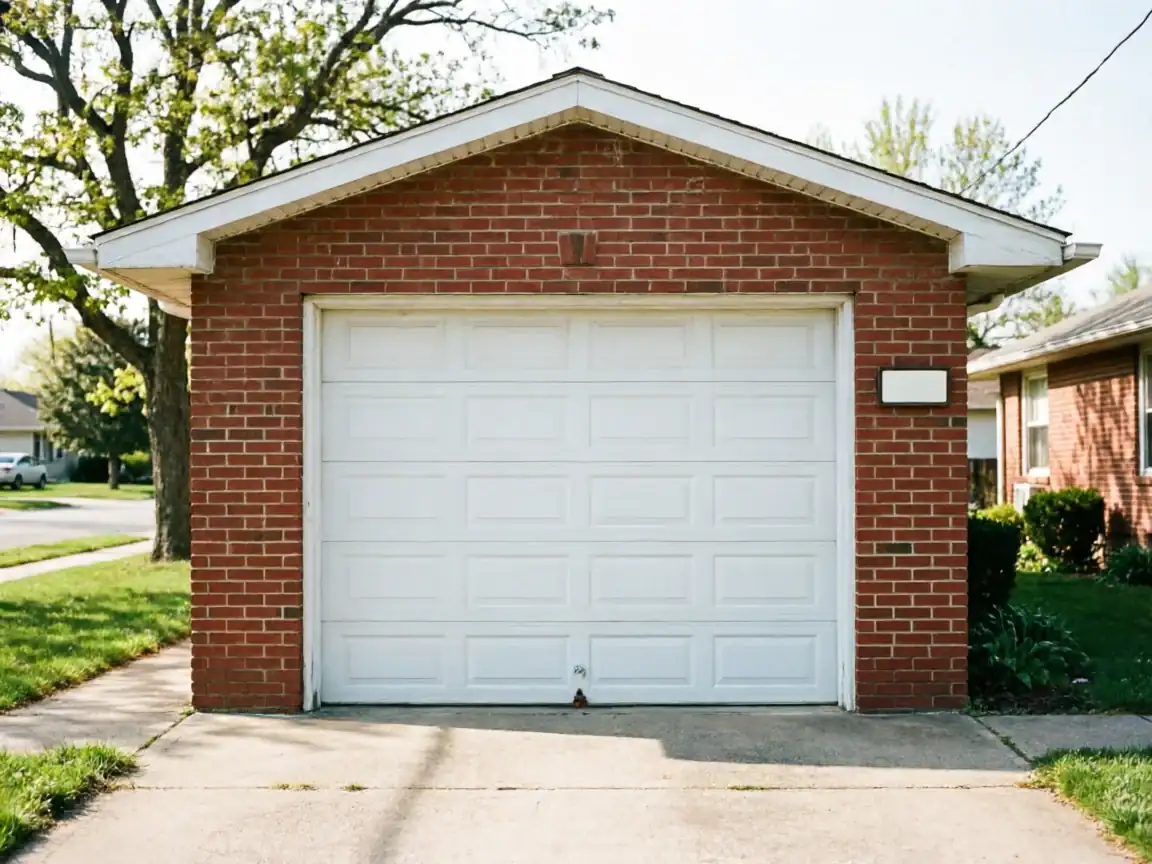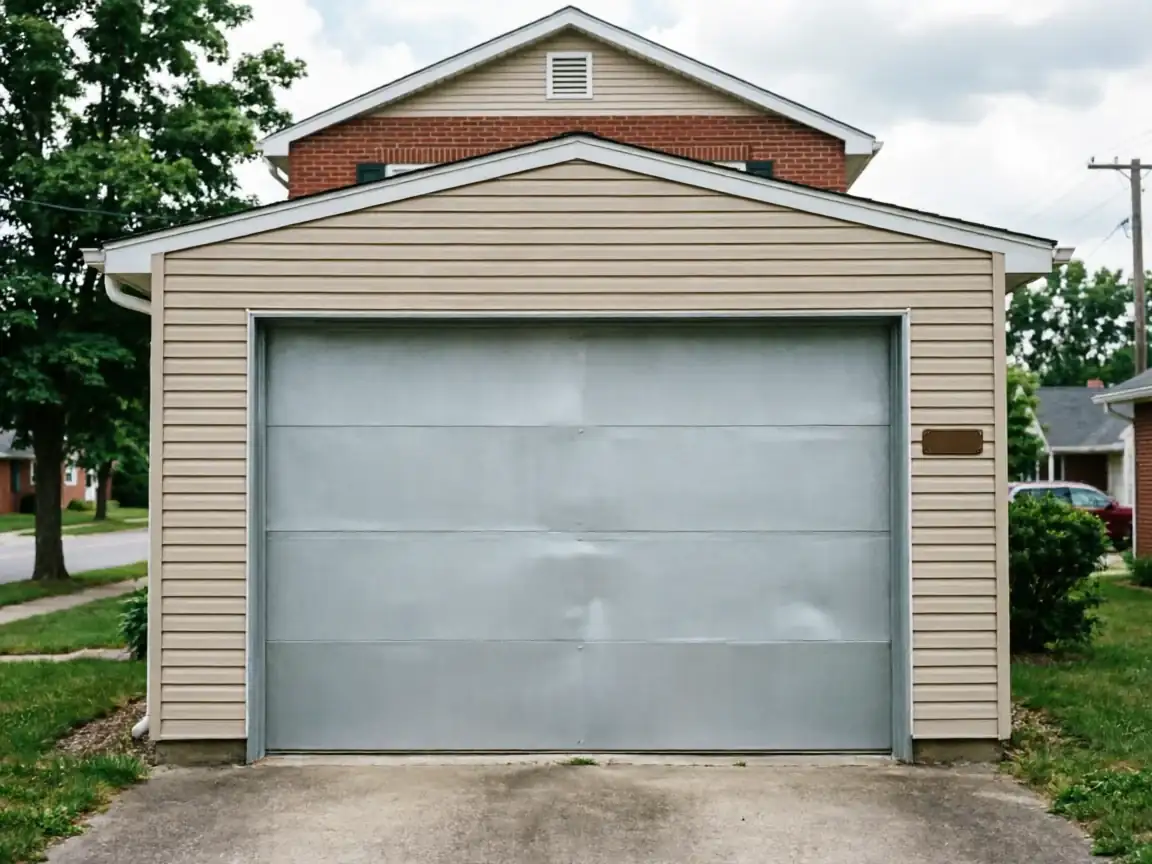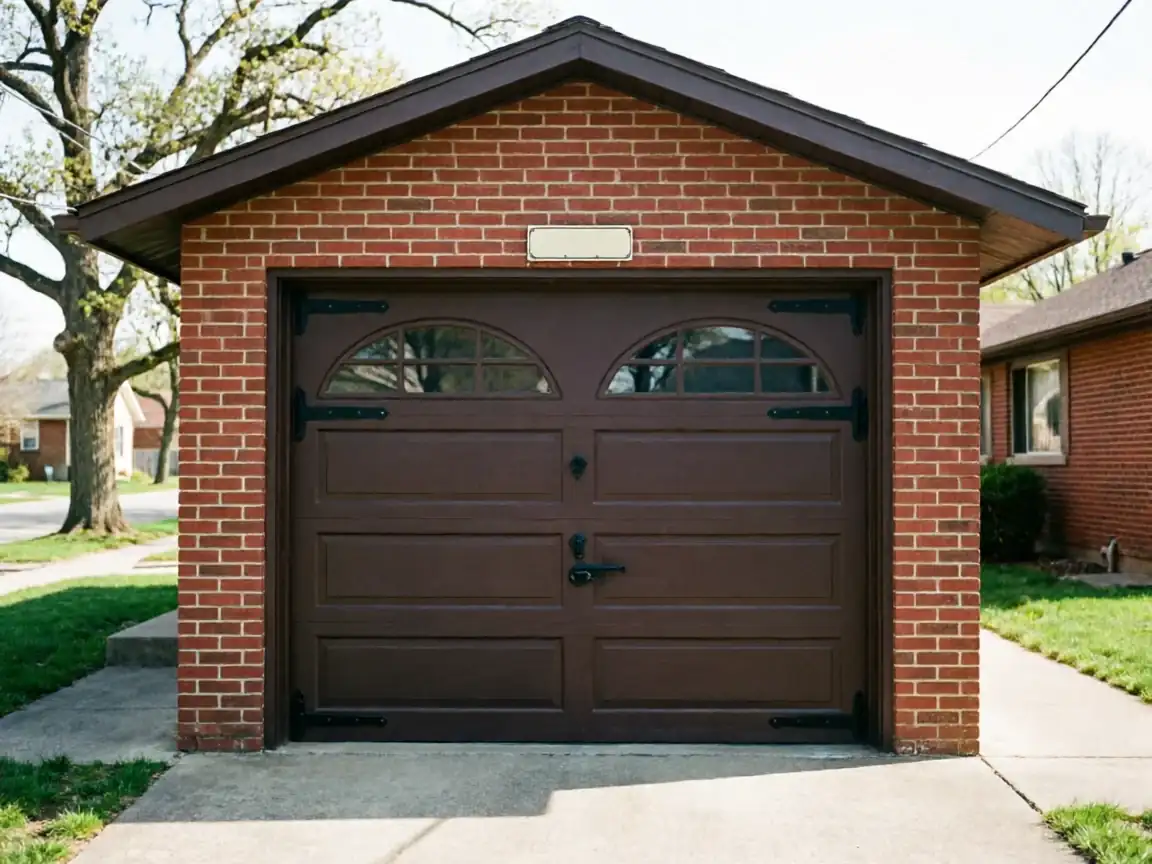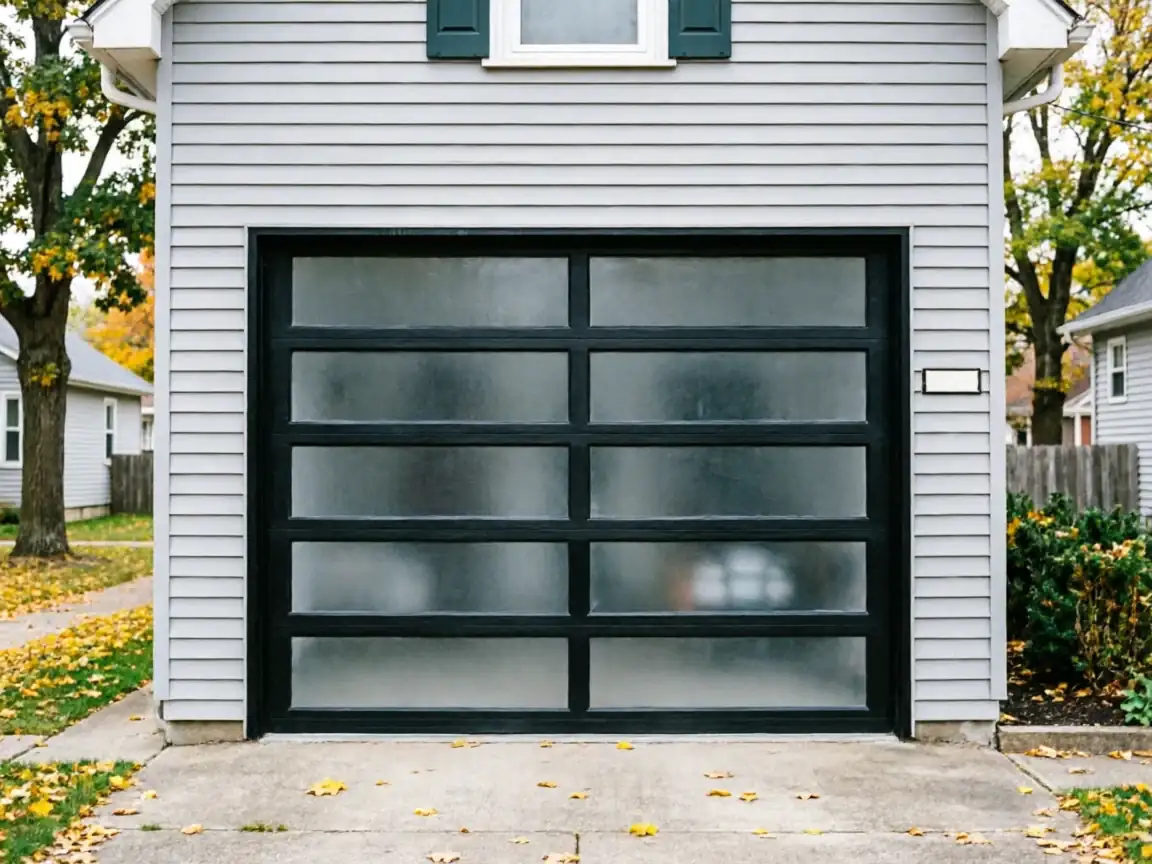
How Long You Are Without the Door
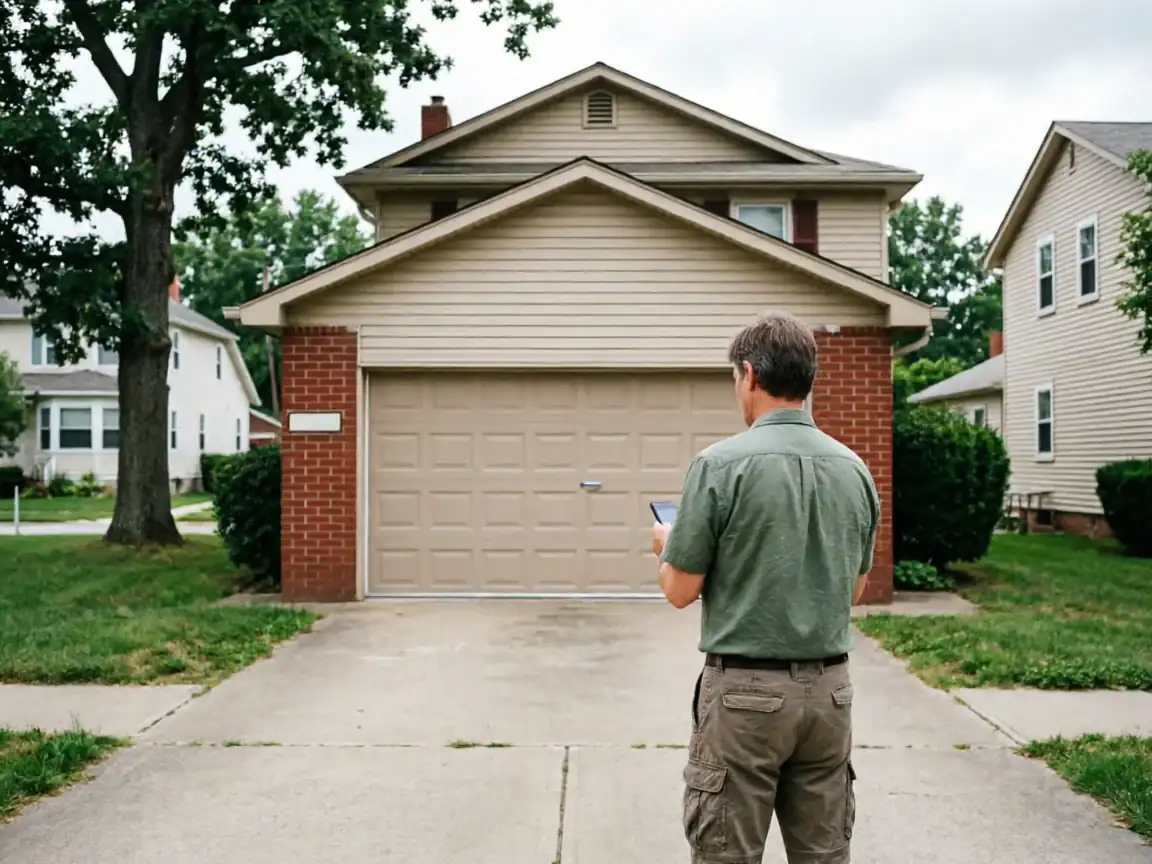
We run this job out of Lakeville, 18 miles from South St. Paul, so there's no local branch to swing by on a whim. What that means in practice: we book the install, confirm the door size and track clearance against your opening before the truck leaves, and do the measuring once instead of twice. For a house built in the 1957 range, openings often run narrower than what's stocked as standard today, so we confirm dimensions on the first visit rather than guessing from a quote over the phone.
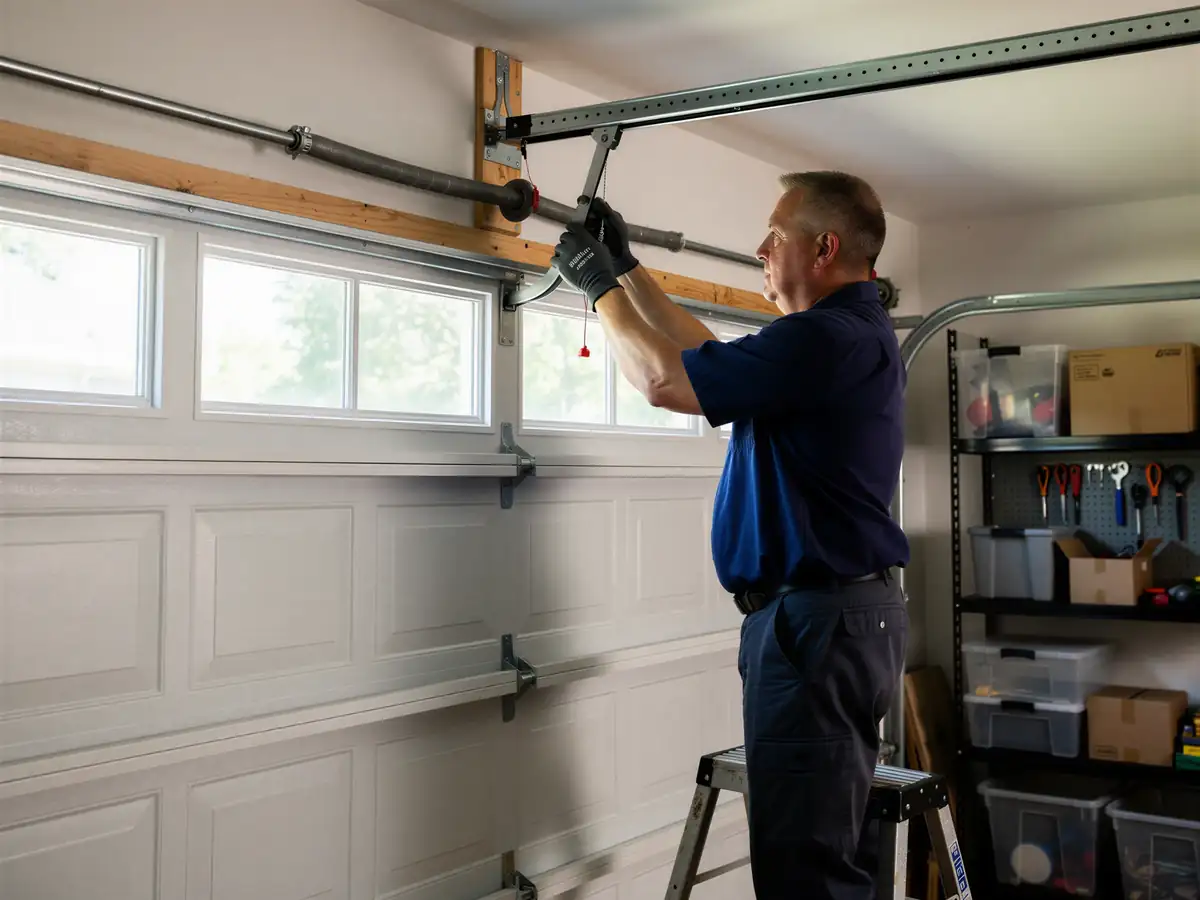
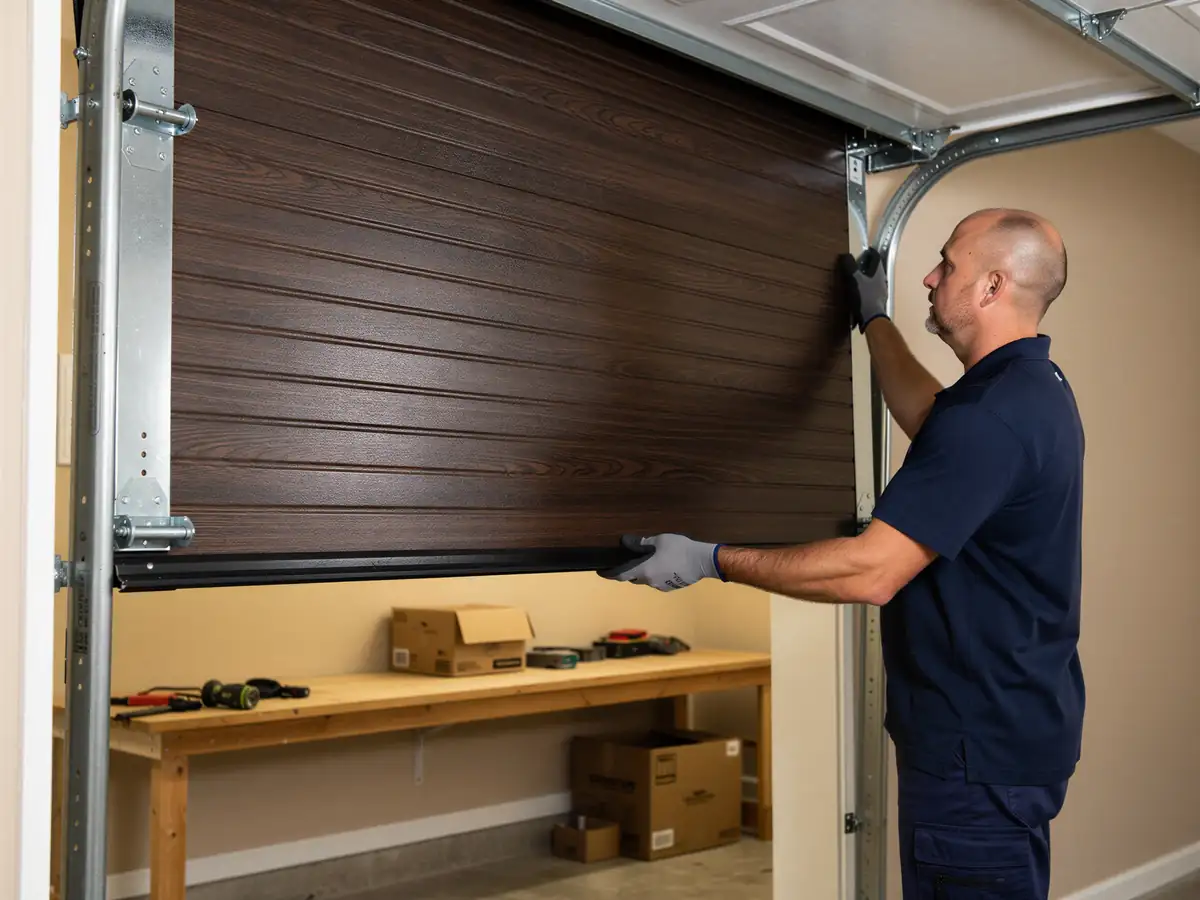
Most single-door installs on an older opening take half a day once the crew is on site, two-car doors or anything needing header work run longer. We don't promise a same-day swap from a cold call - the drive alone puts that off the table - but once scheduled, the install itself doesn't drag. If your opening turns out to be a nonstandard size, we tell you that before the truck loads, not after.
What Can Go Wrong
A door installed when the house was built in 1957 was never designed around today's spring systems or insulation standards. The panels are often heavier gauge steel with no foam core, which means the opener fighting them wears out faster than it should. Tracks from that era were sized for doors that don't match what's sold now, so a straight swap sometimes isn't straight at all - the jamb, the header, and the track spacing all need checking.
We also see openings that were resized once already, by a previous owner patching in a different door than the house was built with. That shows up as framing that doesn't line up square, which an installer has to account for or the new door binds on one side within a year. None of this is dramatic, but it's the kind of thing that turns a one-hour swap into a half-day job if nobody checks for it first.
What Causes It Around Here
South St. Paul sits in the same cold-moderate climate band as the rest of the region we cover
Which means freeze-thaw cycling on steel and hardware every winter. On a door built to 1957 standards, that cycling finds the gaps - literally, since insulation wasn't part of the spec back then. Thermal movement in an uninsulated panel loosens fasteners and stresses hinges faster than it would on a door built with a foam core.
Across our wider service area the median house dates closer to 1984
Nearly thirty years newer than South St. Paul's typical build year. That gap matters for installation, not just repair: newer housing stock across the region tends to have standard-size openings built to a spec that matches what's on the shelf. South St. Paul's older stock doesn't always clear that bar, so we check opening size and header depth before quoting a model, rather than assuming it'll be a drop-in.
Doing It Yourself
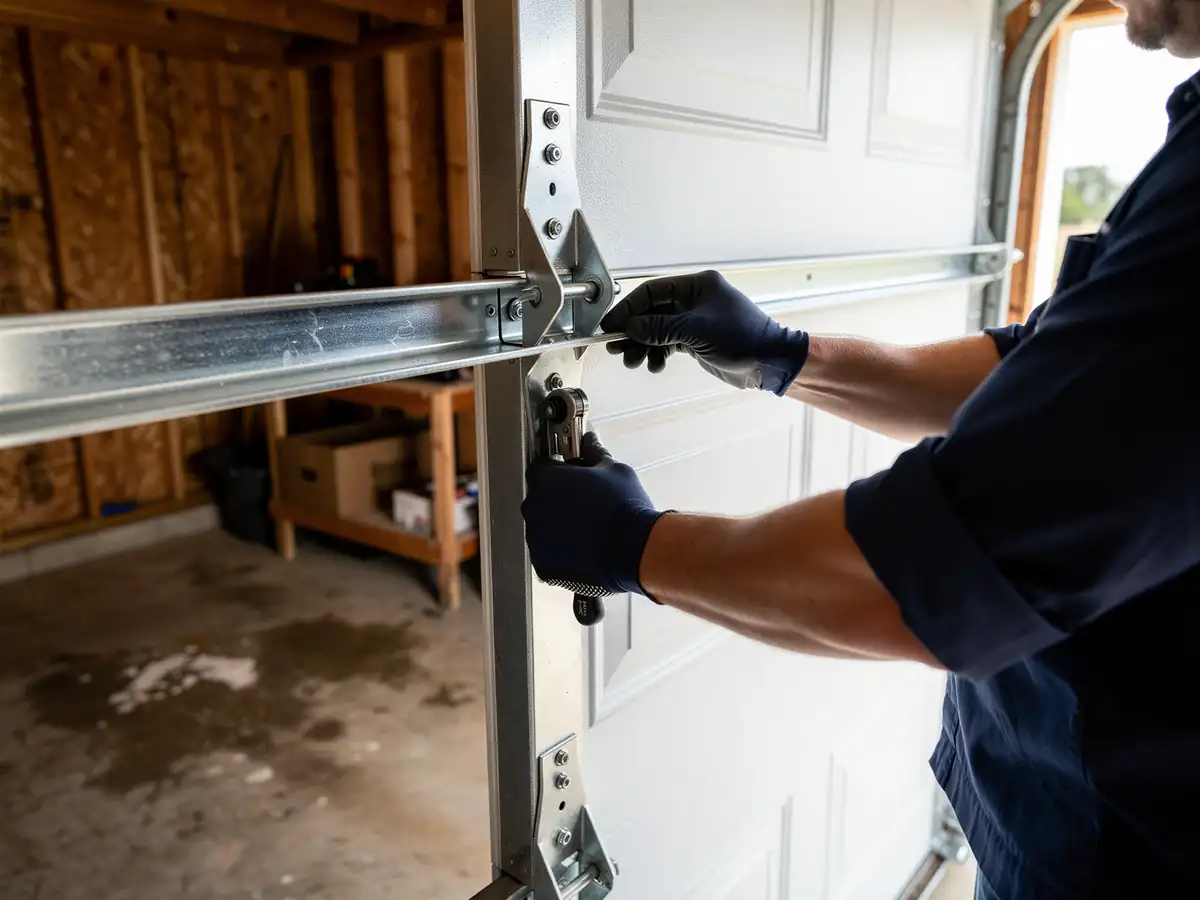
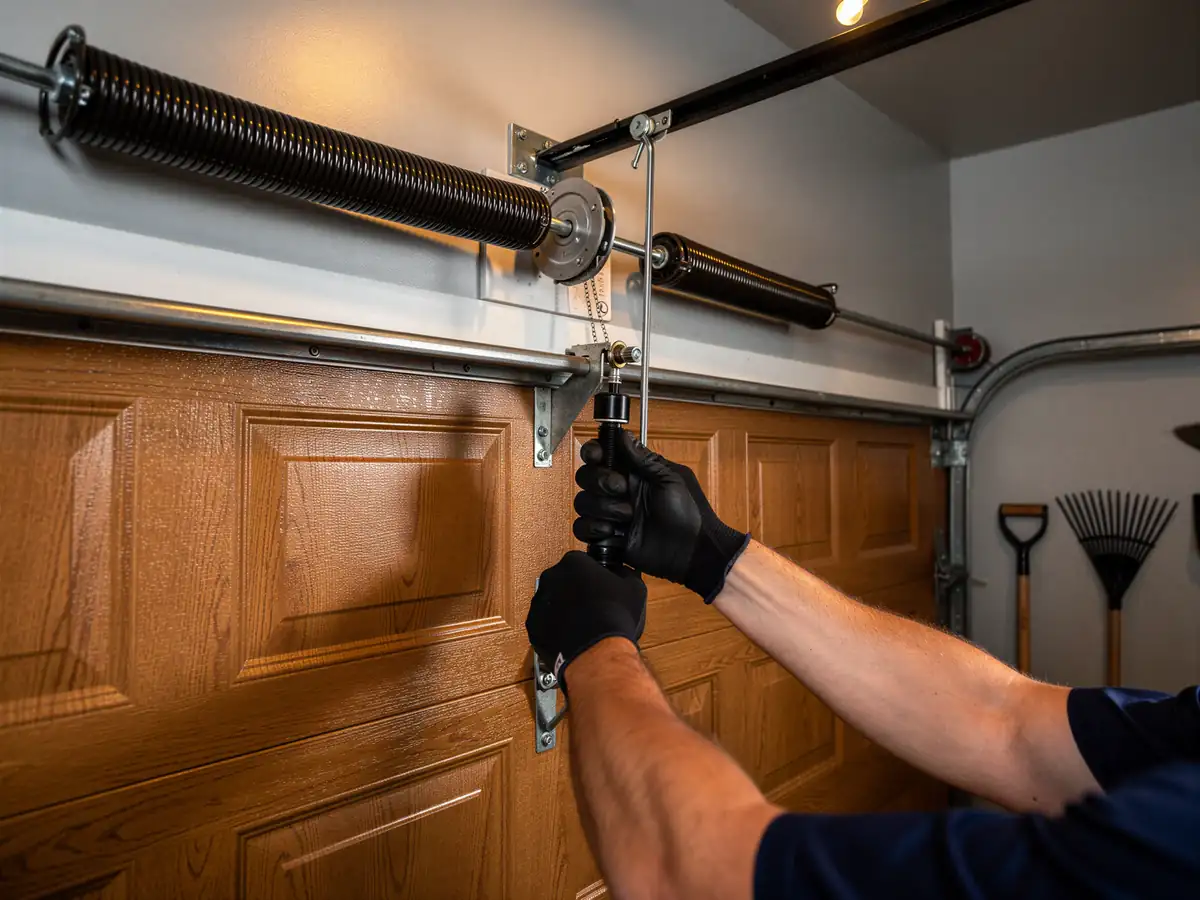
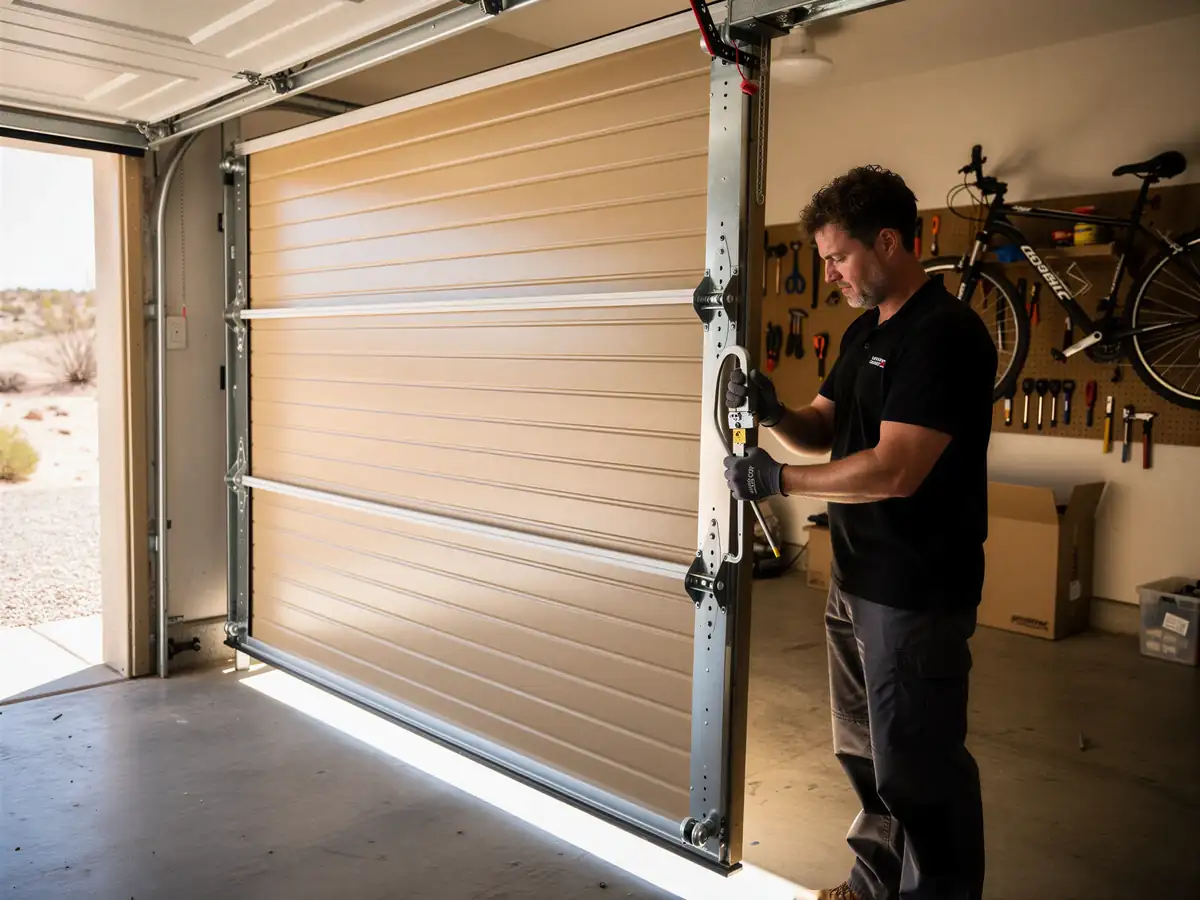
A garage door is not the DIY project to learn on, and an older opening makes that truer, not less. Panel sections, torsion springs under load, and header brackets rated for the wrong door size are a bad combination to improvise around. If you've got a 1957-era opening and you're matching a new door to it, get the opening measured by someone who installs for a living before you order anything - a door that's an inch off on width or height either won't seat right or won't seal against the cold.
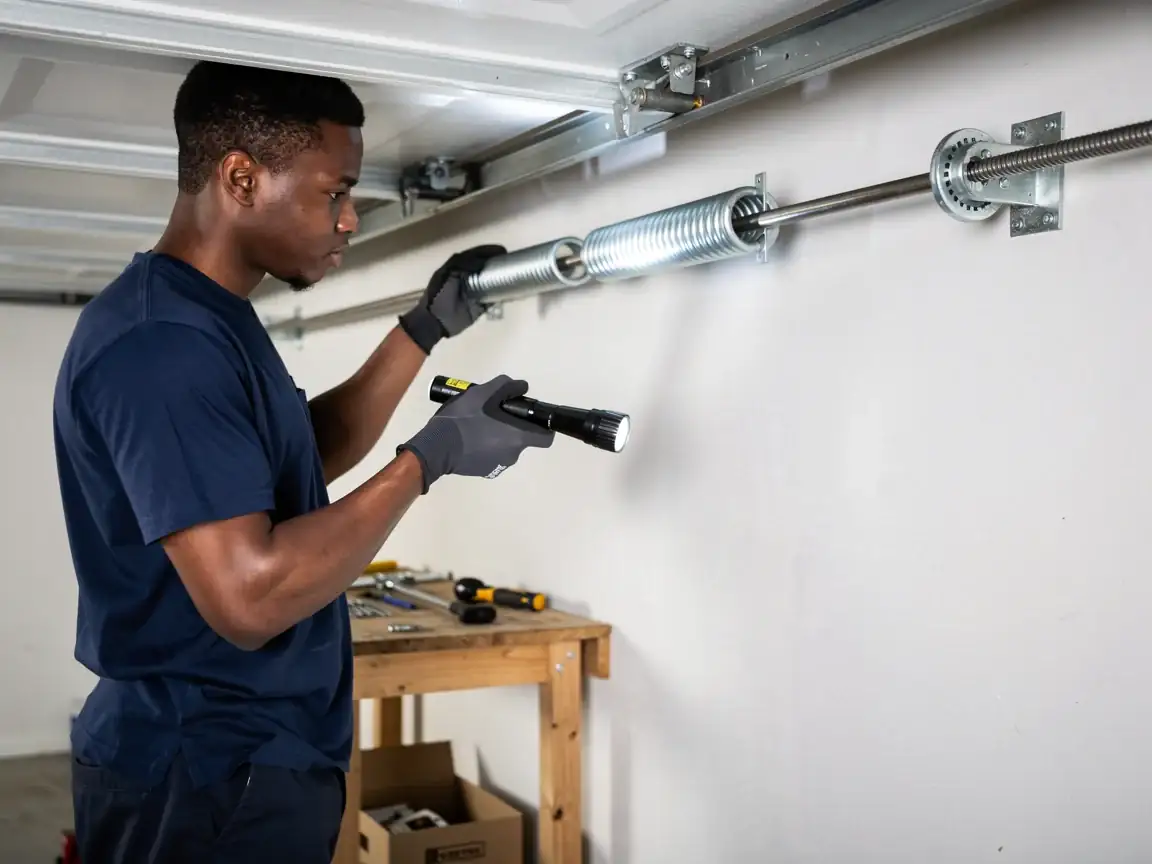
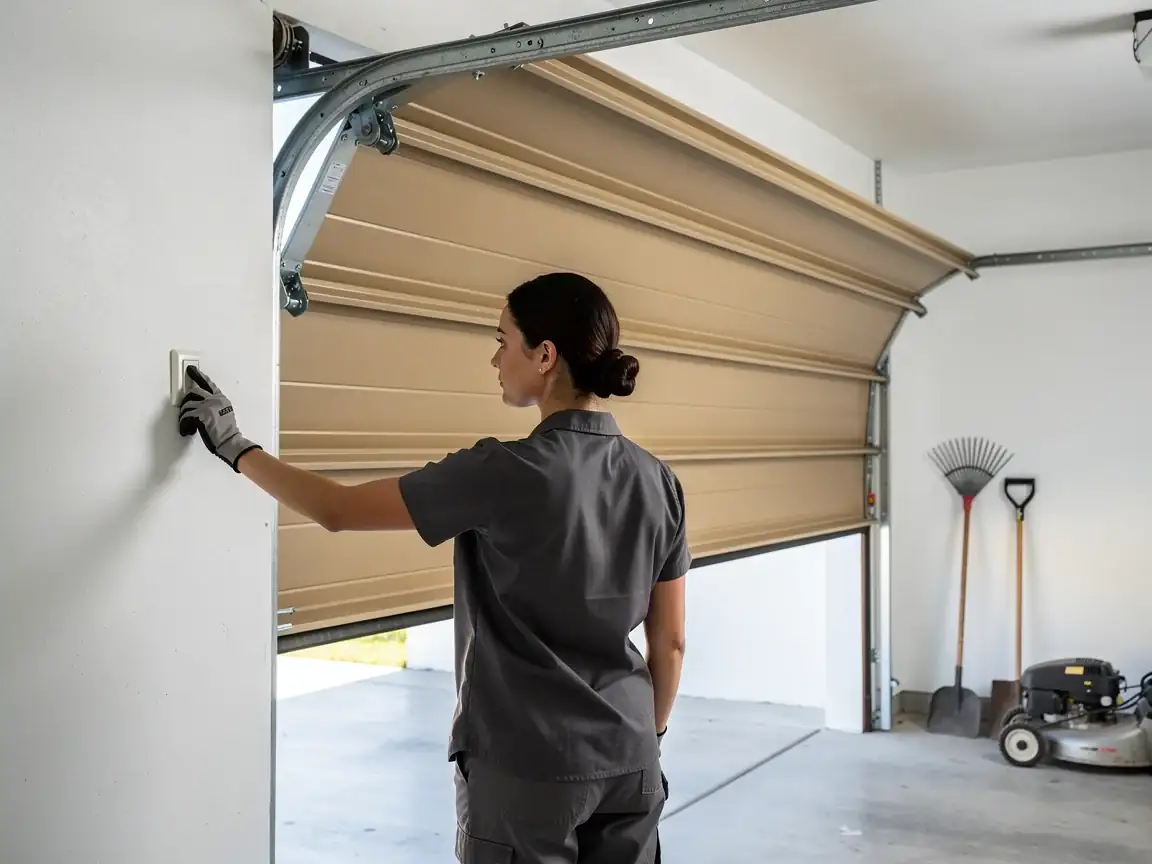
What you can reasonably do yourself: check the weatherstripping at the base and sides, test the balance by disconnecting the opener and lifting the door halfway by hand (it should hold position, not drop or fly up), and look at the track for rust or bent rail before calling anyone out. Beyond that, especially on anything involving spring tension or reframing an old opening, it's not worth the trip to the ER to save a service call.
What the Repair Takes
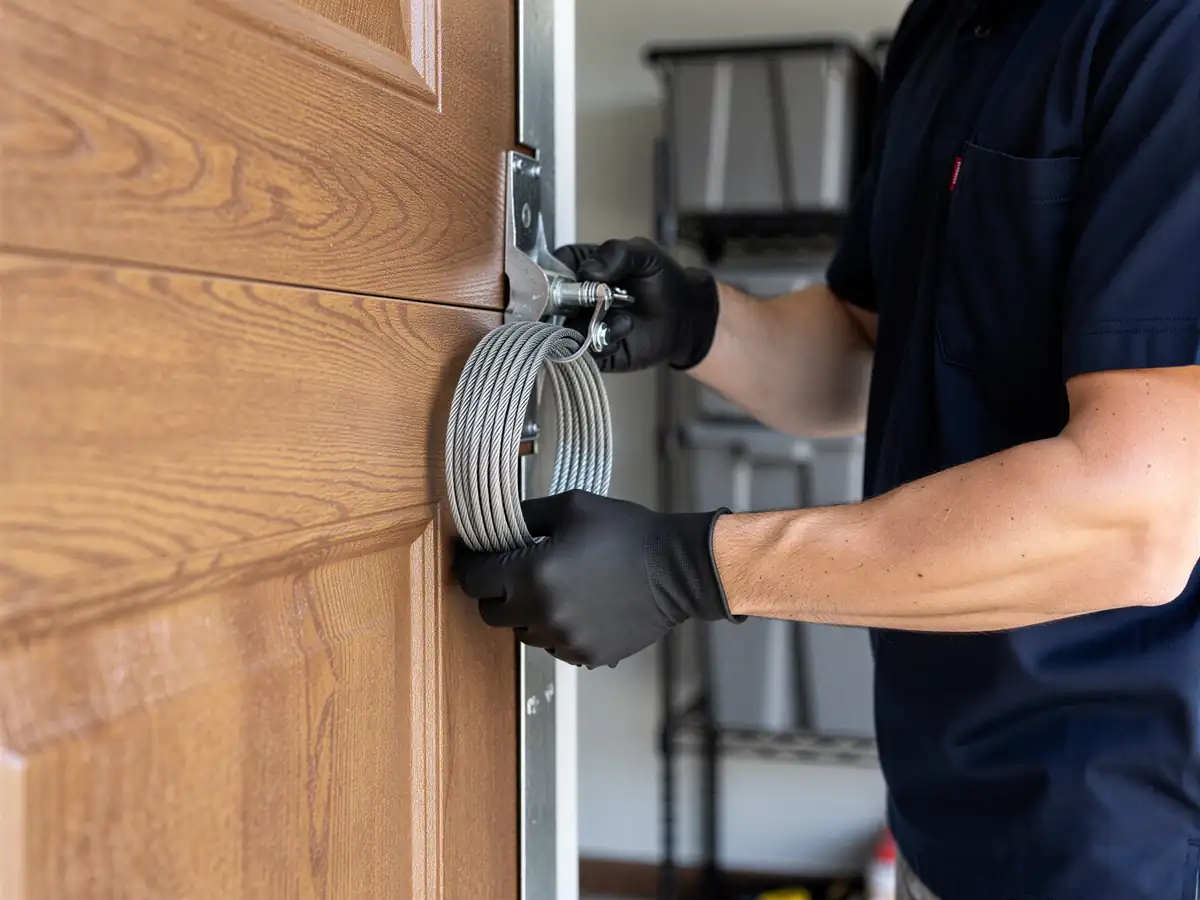
For South St. Paul, an install usually means reconciling an opening built in 1957 with hardware made for today's standard sizes. That can mean a new header, resized track mounts, or in some cases a custom-width door if the opening was never widened to current standard. We tell you which of those applies once we've measured, not before - quoting blind on a house this age is how installers end up back on site a second time.
One honest limitation: nonstandard or custom-width doors take longer to source than stock sizes, sometimes by a couple of weeks, because they're not sitting on a shelf anywhere nearby. If your opening is standard width, we can usually move fast. If it's not, we'll tell you that up front so you're not waiting on a surprise. We don't push insulated doors as the only option either - for a detached garage that's unheated, the cost difference may not pay you back, and we'll say so.
How to Book
Because we're dispatching from Lakeville, 18 miles out, booking ahead gets you a tighter window than calling same-day and hoping
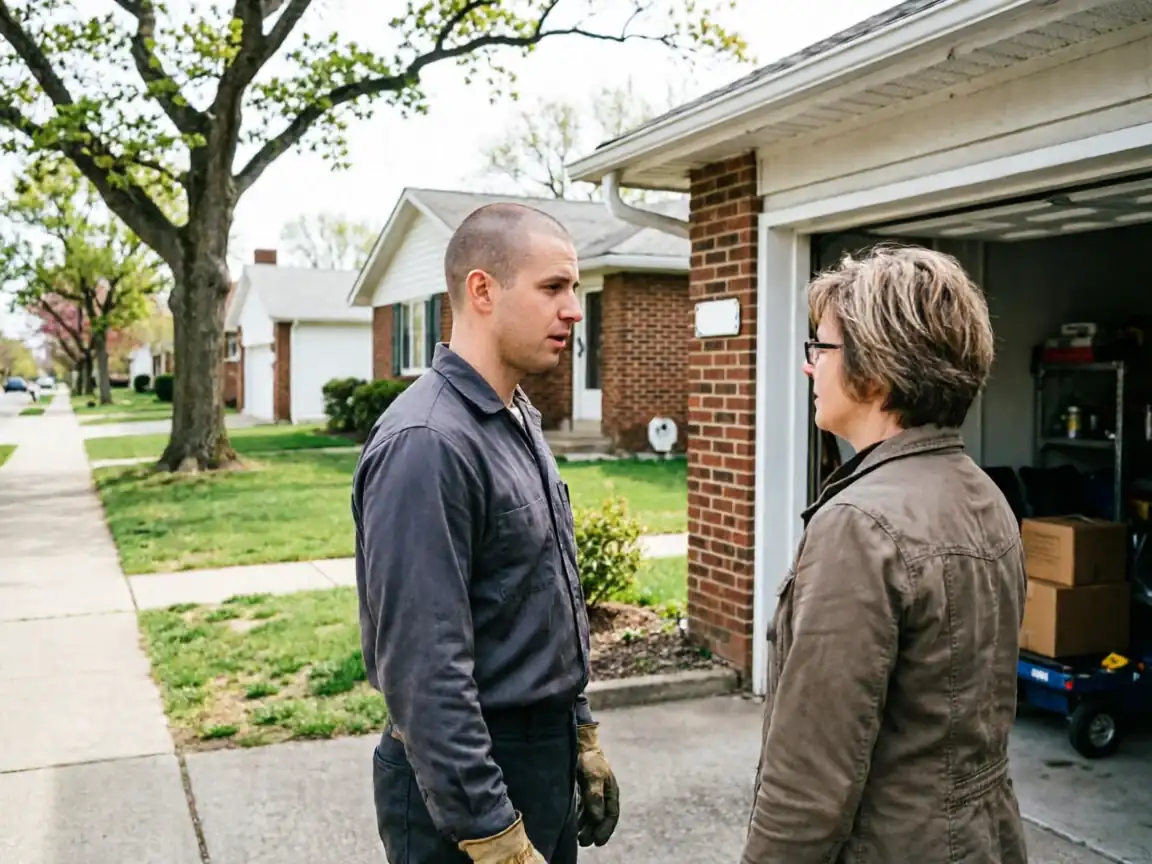
Have your opening's rough width and height ready if you know them, and mention the house's build era if you know it - for South St. Paul that's usually mid-to-late 1950s, which changes what we bring on the truck. You can see what we cover for this area on our South St. Paul service page, and if you want the fuller rundown of installation work across the territory, that's on the Lakeville installation page.
- 18 miles
We'll ask a few questions about the opening before we quote a door model
Since guessing on a house this age tends to cost everyone a second trip. That's not a sales tactic - it's just what an opening built before today's standard sizes existed actually requires.